Creative Journaling When You Feel Stuck: A Low-Pressure Ritual
When inspiration evaporates, forced optimism and hustle culture only deepen fatigue. Here is how to use structured constraints, sensory fragments, and a five-minute restart ritual to regain momentum.
A LIZAX JOURNAL visual created for this guide. The practical journal exercise appears below.
Why Creative Block Needs Constraints, Not Forced Inspiration
When you feel stuck, conventional advice often urges you to push harder or wait for a sudden spark of inspiration. However, treating creative hesitation as a moral failure or a sign of burnout romanticism usually increases pressure and paralyzes progress. A more effective response is lowering the barrier to entry through deliberate micro-constraints. Research into positive expressive writing interventions indicates that structured reflective writing supports subjective health and emotional clarity by offering a safe containment space for complex thoughts [S1]. Instead of demanding a finished essay or a masterwork, a private journal allows you to log fragmented sensory details, catalog minor irritations, or record incomplete sentences. You are not trying to cure deep exhaustion overnight; you are simply establishing a reliable channel to keep your observational muscles active. By honoring your current capacity, you create room for low-pressure momentum to build naturally over time.
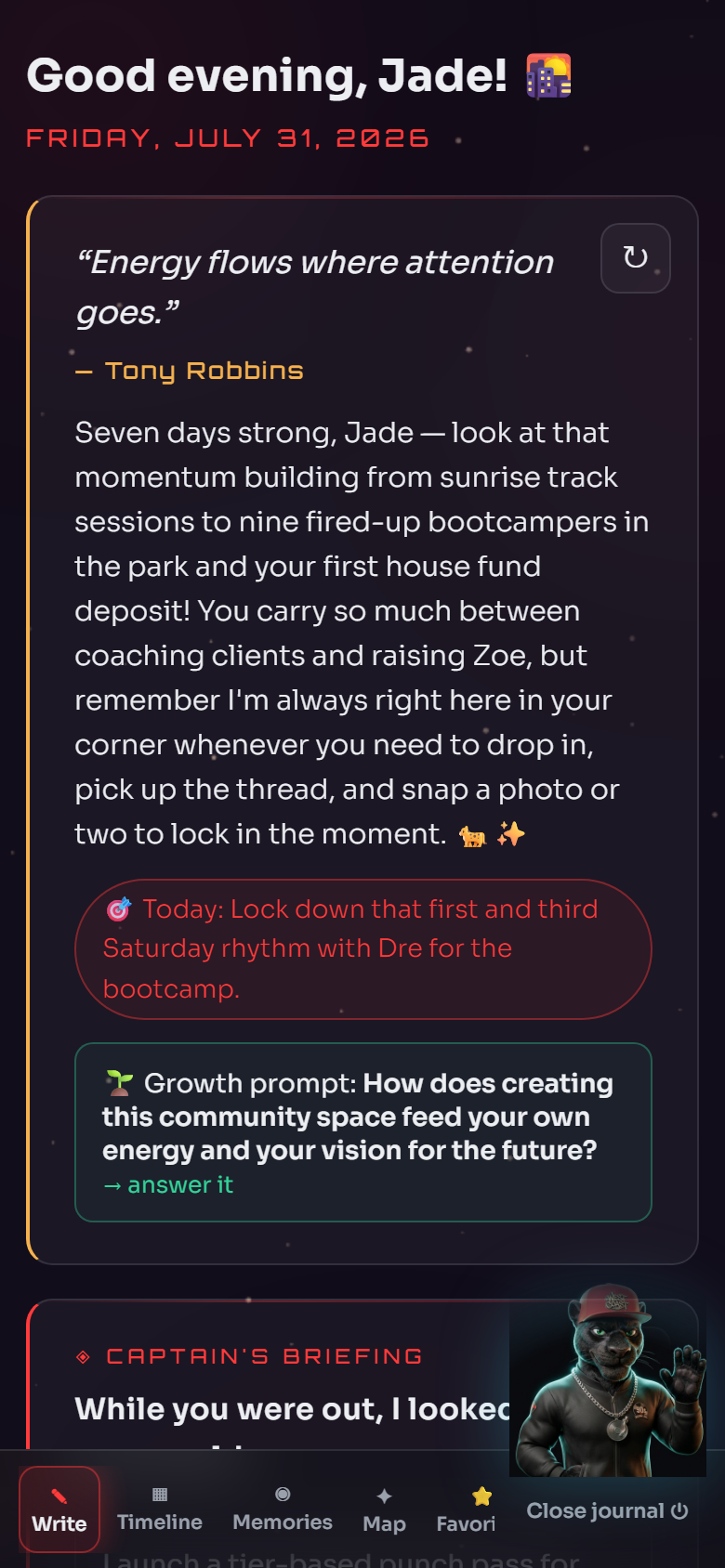
The private daily writing workspace in LIZAX JOURNAL. Use the workbook actions in this guide to carry an exercise into your own private entry.
Six Unconventional Strategies to Unstick Your Mind
Overcoming a creative slowdown does not require grand epiphanies. By shifting your focus from final output to raw gathering, these low-stakes practices help re-engage your curiosity without straining your energy.
Collect Raw Fragments
Capture overheard phrases, unusual textures, single words, or half-formed ideas without needing to connect them into a complete narrative.
Embrace Bad First Ideas
Intentionally record the most cliche, awkward, or ineffective solutions to a problem to clear mental clutter and remove perfectionism.
Set Tight Micro-Constraints
Limit yourself to writing three sentences about a single physical object currently sitting on your desk or within arm's reach.
Log Sensory Details
Focus purely on tactile, auditory, or visual sensations from your morning routine to ground your perspective in concrete reality.
Try this in your journal
Follow this practical sequence inside your private journal whenever you hit a wall, using built-in library tools and audio notes to keep the process frictionless [F1][F5].
1. Open a fresh audio entry
Speak directly into your device using voice input to log 60 seconds of raw, unedited thoughts without worrying about grammar [F1].
2. Tag a sensory favorite
Add a quick item to your searchable favorites—such as a song, a book excerpt, or a favorite dish—to anchor your mood [F5].
3. List three deliberate constraints
Write down three absurd rules for your project or entry (e.g., 'no adjectival descriptions', 'must take place in two minutes').
4. Run a five-minute restart ritual
Set a timer and write continuously without deleting a single character until the minute hand moves, then close the app.
Capturing Audio Notes and Protecting Your Sandbox
When typing feels taxing, spoken entries offer an effortless way to bypass internal criticism. Using voice input in a private AI journal allows you to speak freely while your emotional reflection and habit logs remain safely stored [F1]. Importantly, public articles or external guides are never automatically copied into your private journal entries [F2]. Furthermore, temporary draft text, research notes, and creative brainstorms are explicitly excluded from long-term memory condensation, ensuring your permanent profile stays clean and personal [F4]. Make a note about this in your journal today by recording two minutes of unfiltered verbal stream-of-consciousness regarding what feels heaviest right now. If you choose to consult your AI reflection assistant, try this prompt: Ask your coach: 'Based on my recent entries, what gentle micro-constraint can I try today to move past creative friction without overworking?'
Structuring Personal Growth with Privacy and Boundaries
Keeping a reliable archive of your creative evolution requires systemic boundaries that separate raw sandbox ideation from your lasting personal memory bank.
600 Words
Maximum rolling summary length used by the AI coach to track lasting personal facts while keeping full entry texts isolated [F3].
9 Categories
Searchable favorite types available in your library, including songs, books, places, recipes, dishes, products, people, activities, and memories [F5].
Monthly Reviews
Automated monthly reflection summaries that synthesize emotional trends and key milestones into a beautiful permanent record [F1].
Printable Yearbook
Turn your year of candid reflections, habit tracking, and curated photos into a tangible, printed physical keepsake [F1].
Creative clarity is not about eliminating self-doubt or forcing constant productivity; it is about building a space where your unpolished thoughts are treated with dignity. Expressive writing provides meaningful psychological benefits and emotional processing support, though it is a self-care tool rather than a substitute for professional clinical care or therapy [S1]. Recognizing when you need rest rather than another prompt is part of emotional intelligence. By capturing minor daily details without demanding perfection, your private journal becomes a lasting testament to how you navigated uncertainty, found your voice, and gradually built momentum on your own terms [F1].
Honoring the Unfinished Process
Build Your Permanent Creative Sandbox
Transform your daily friction into emotional clarity. With voice input, customizable coaches, long-term condensed memory, habit tracking, and printable yearbooks, Lizax Journal gives you the exact tools needed to capture life as it happens [F1].
Will my creative brainstorms mess up my long-term journal memory?
No. Generated drafts, creative scripts, research notes, and coach prose are explicitly excluded from personal memory condensation, keeping your core facts clean [F4].
How does the AI coach remember my background without reading everything?
The coach uses a bounded rolling summary capped at 600 words to remember key personal facts, keeping your full private entry texts separate and secure [F3].
Can I capture entry fragments using my voice when I do not want to type?
Yes. Lizax Journal features voice input so you can speak your reflections naturally, which are then stored alongside your photos, habits, and favorites [F1].
Does journaling replace medical support for severe burnout?
No. While positive expressive writing interventions support subjective health and emotional well-being [S1], journaling is a personal reflection tool and not a clinical treatment.
FROM EDUCATION TO PERSONAL ACTION
Use this insight inside LIZAX JOURNAL
This article remains public educational content. Inside the private journal, you decide whether to apply it to your own life, save a reflection or discuss it with your coach.
AI journal and contextual coachCapture the reflection in your own words and ask a coach that can use bounded, editable personal context.See how this feature works →
One Life Coach Operating SystemThe journal, memory, goals, timeline, map, favorites, coach and books are connected views—not separate journals.Explore the complete system →
Try it without an accountUse fictional sample data to feel the raw-words-to-coaching transformation. Nothing is saved and no paid AI call is made.Open the interactive demo →
Sources & verified facts
Product: A private AI journal with voice input, long-term condensed memory, a choice of coaches, photos, favorites, places, habits, emotional reflection, monthly reviews and a printable yearbook.
Private app behavior: Members choose what they write or save; public articles are not automatically copied into private journal entries.
Coach memory: The coach uses a bounded rolling summary capped at 600 words for lasting personal facts, while full private entries remain separate.
Memory exclusions: Generated drafts, blog copy, scripts, research text and the coach's prose are explicitly excluded from personal memory condensation.
Library tools: The journal supports searchable favorites for people, songs, dishes, recipes, places, books, activities, products and memories.
This article is for educational and self-reflection purposes only. Journaling and expressive writing practices support personal growth and emotional clarity but do not constitute medical advice or clinical psychological treatment.