Breakup Journaling Without Rumination: A Compassionate Guide
Organize your facts, process complex feelings, set healthy boundaries, and focus on practical daily growth without getting trapped in overthinking loops.
A LIZAX JOURNAL visual created for this guide. The practical journal exercise appears below.
Breakup Journaling Without Rumination: Separating Facts from Loops
When a relationship ends, the mind naturally searches for answers, frequently replaying conversations or analyzing past moments in continuous loops. Breakup journaling without rumination shifts your focus from reliving distress to organizing your present reality. Scientific research indicates that therapeutic writing and structured journaling can support emotional self-regulation and psychological management when practiced thoughtfully [S1]. However, unstructured vent writing without boundaries can sometimes reinforce repetitive distress cycles. To break free from analytical loops, your journal should serve as a practical container rather than an endless commentary. By externalizing raw feelings onto the page, you create distance between your core self and temporary emotional waves. Journaling does not promise a linear healing timeline or act as a cure, but it gives your mind a predictable structure to unload daily burdens, track practical adjustments, and notice gradual emotional shifts over time without forcing premature closure.
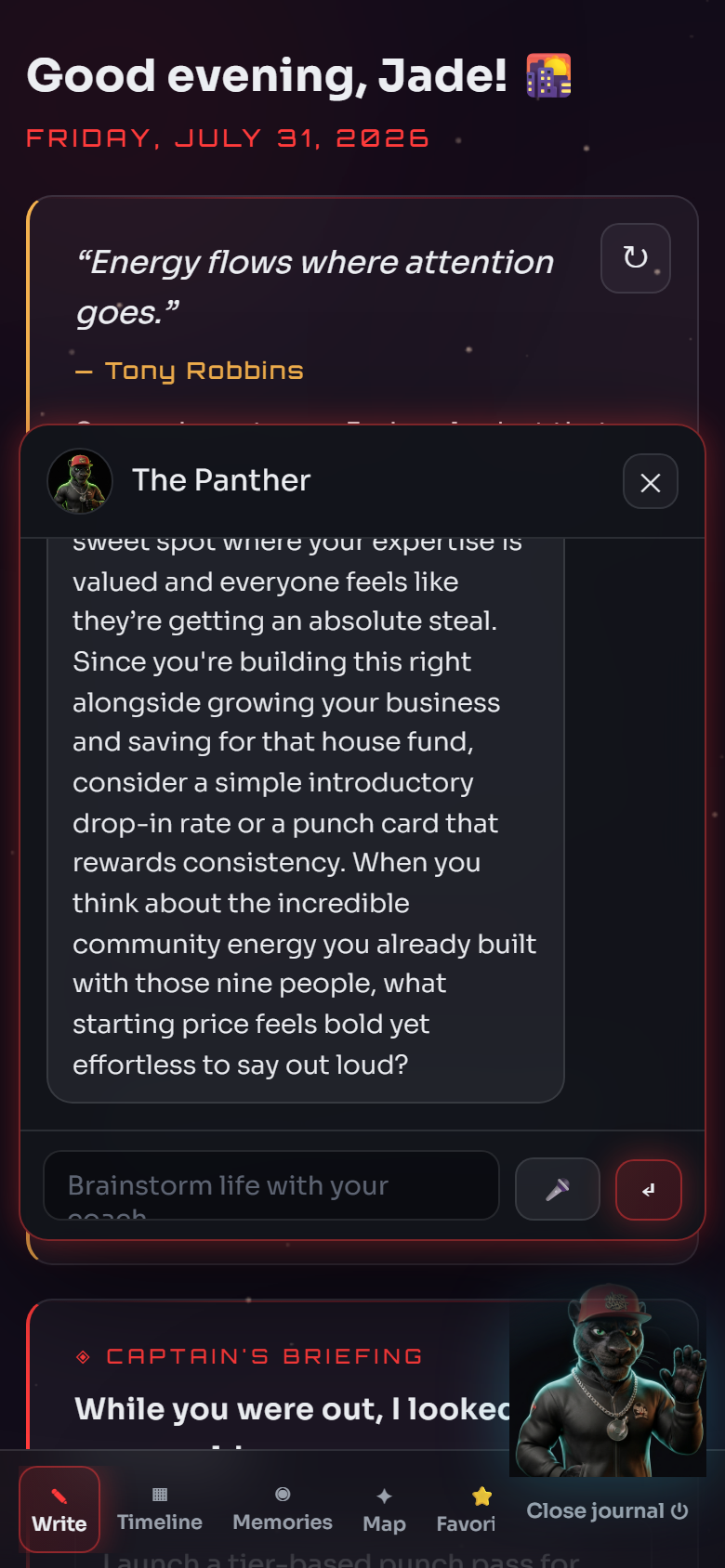
The journal's private AI coach conversation in LIZAX JOURNAL. Use the workbook actions in this guide to carry an exercise into your own private entry.
The Five Pillars of Post-Breakup Clarity
To keep your writing constructive during emotional distress, anchor your practice around five clear categories rather than open-ended brooding.
Fact vs. Story Sorting
Separate plain objective facts (what was said or done) from narrative interpretations (what it means about your worth) to interrupt circular overthinking.
Emotional Temperature Tracking
Log your current feelings daily without judgment using brief notes or voice entries, recognizing that intense feelings naturally fluctuate.
Boundary & Logistics Log
Keep a dedicated list for practical steps, shared asset transitions, and personal boundaries to keep administrative details separate from emotional processing.
Support & Connection Network
Record key friends, family members, and trusted professionals you can reach out to when loneliness or acute distress feels overwhelming [S2].
Try this in your journal
Follow these practical, step-by-step actions inside your journal to maintain focus and guard against repetitive overthinking.
1. Speak your raw thoughts via voice input
Use voice input in Lizax Journal to speak unedited thoughts during high-emotion moments [F1]. Let the voice feature capture your raw feelings without worrying about syntax or grammar.
2. Organize your rebuild tools in Searchable Favorites
Make a note about this in your journal: navigate to your searchable favorites to save comforting books, uplifting dishes, familiar places, and anchor songs that ground you during tough days [F5].
3. Set your coach focus and prompt
Ask your coach: 'Help me summarize today's entry into three clear facts and one practical task for tomorrow.' Your chosen coach uses a bounded rolling summary capped at 600 words for key personal facts while keeping full private entries separate [F1, F3].
4. Establish a strict rereading boundary
Commit to not rereading past emotional entries for at least 30 days. Focus on capturing today's reality instead of inspecting yesterday's pain.
Rereading Boundaries and Seeking Human Support
A critical part of breakup journaling without rumination is establishing a healthy rereading boundary. Inspecting old journal entries while your nervous system remains vulnerable can reactivate grief, dragging you back into analytical loops. Agree with yourself to treat recent entries as an archive under seal for at least four to six weeks. If you feel compelled to re-open old entries, redirect that energy into logging practical self-care habits or reflecting on monthly reviews [F1]. Furthermore, it is essential to recognize the boundaries of self-guided journaling. Journaling is a reflective personal practice, not a substitute for professional mental healthcare or crisis support. If you experience persistent depressive symptoms, intrusive thoughts, or overwhelming emotional distress, seek professional human support [S2]. Resources like SAMHSA provide guidance on finding qualified mental health professionals and support networks when personal coping strategies are not enough [S2].
Your journal is not a courtroom to prove who was right, nor a time machine to rewrite the past. It is a quiet sanctuary to honor where you are today and build room for where you are going next.
A Grounding Principle for Emotional Space
Designed for Privacy, Memory, and Personal Boundaries
Lizax Journal combines supportive coaching options with strict data boundaries so you can reflect safely and privately [F1].
Private App Architecture
You choose what you write or save; public educational articles are never automatically copied into your private journal entries [F2].
Bounded Coach Memory
Your selected AI coach retains long-term memory capped at a 600-word rolling summary for personal context while keeping complete private entries distinct [F3].
Strict Exclusion Safeguards
Generated drafts, blog content, research text, and coach prose are explicitly excluded from your personal memory condensation, keeping your personal record clean [F4].
Create Your Private Space for Emotional Clarity
Reflect on your journey with voice input, tailored coaching, emotional habit tracking, and monthly reviews built to support your personal growth without rumination [F1].
How does breakup journaling without rumination differ from standard venting?
Standard venting often involves unguided writing that repeats distressing narratives without limits. Journaling without rumination uses structured prompts, fact sorting, and strict rereading boundaries to process emotions while keeping your focus anchored in present-day actions.
How often should I reread my past post-breakup entries?
We recommend placing a 30 to 60-day freeze on rereading entries written during acute distress. Giving yourself time before reviewing past pages helps prevent emotional re-traumatization and allows you to view your progress with greater perspective.
Can Lizax Journal AI coaches replace a therapist during a breakup?
No. Lizax Journal and its AI coaches offer self-reflection, habit tracking, and structured journaling, but they are not clinical tools or healthcare providers [F1]. If you are experiencing severe distress or mental health challenges, please reach out to licensed human professionals [S2].
Is my private journal data kept separate from public guides and AI memory?
Yes. Members decide what to save, public articles are never copied to private entries [F2], and coach prose or research text is strictly excluded from personal memory summaries [F4].
FROM EDUCATION TO PERSONAL ACTION
Use this insight inside LIZAX JOURNAL
This article remains public educational content. Inside the private journal, you decide whether to apply it to your own life, save a reflection or discuss it with your coach.
Connected people and memoriesConnect reflections to the people and moments involved without automatically sharing private journal content.See how this feature works →
One Life Coach Operating SystemThe journal, memory, goals, timeline, map, favorites, coach and books are connected views—not separate journals.Explore the complete system →
Try it without an accountUse fictional sample data to feel the raw-words-to-coaching transformation. Nothing is saved and no paid AI call is made.Open the interactive demo →
Sources & verified facts
Product: A private AI journal with voice input, long-term condensed memory, a choice of coaches, photos, favorites, places, habits, emotional reflection, monthly reviews and a printable yearbook.
Private app behavior: Members choose what they write or save; public articles are not automatically copied into private journal entries.
Coach memory: The coach uses a bounded rolling summary capped at 600 words for lasting personal facts, while full private entries remain separate.
Memory exclusions: Generated drafts, blog copy, scripts, research text and the coach's prose are explicitly excluded from personal memory condensation.
Library tools: The journal supports searchable favorites for people, songs, dishes, recipes, places, books, activities, products and memories.
This article is for informational and educational purposes only and does not constitute medical, psychological, or clinical advice. Journaling is a self-care tool, not a replacement for professional therapy or crisis intervention. If you are experiencing severe mental health distress, please consult a qualified healthcare provider or crisis service [S2].