How to Notice Relationship Patterns Without Diagnosing Anyone
Move away from clinical labels and pseudo-psychology. Discover how simple, descriptive journaling helps you map relational triggers, unmet needs, and genuine repair attempts with total clarity.
A LIZAX JOURNAL visual created for this guide. The practical journal exercise appears below.
The Trap of Clinical Distance: Why We Label Instead of Observe
When friction arises in a partnership, friendship, or family dynamic, it is tempting to reach for diagnostic terms. Labeling someone as 'avoidant,' 'narcissistic,' or 'anxious' offers an immediate feeling of order and control. However, using clinical language to describe everyday interpersonal tension often obscures the actual mechanics of what is taking place. Instead of fostering empathy or solving the underlying issue, diagnostic labels often harden defenses, assign permanent blame, and stop meaningful dialogue.
Systematic journaling offers an evidence-backed alternative by encouraging structured self-reflection and tracking observable behaviors rather than assigning static psychiatric diagnoses [S1]. By recording what actually happened—the exact phrasing used, the physical sensation in your body, and your immediate reaction—you replace reactive pathologizing with clear, candid self-awareness. Journaling shifts your perspective from evaluating someone else's character to understanding your own choices and boundaries.
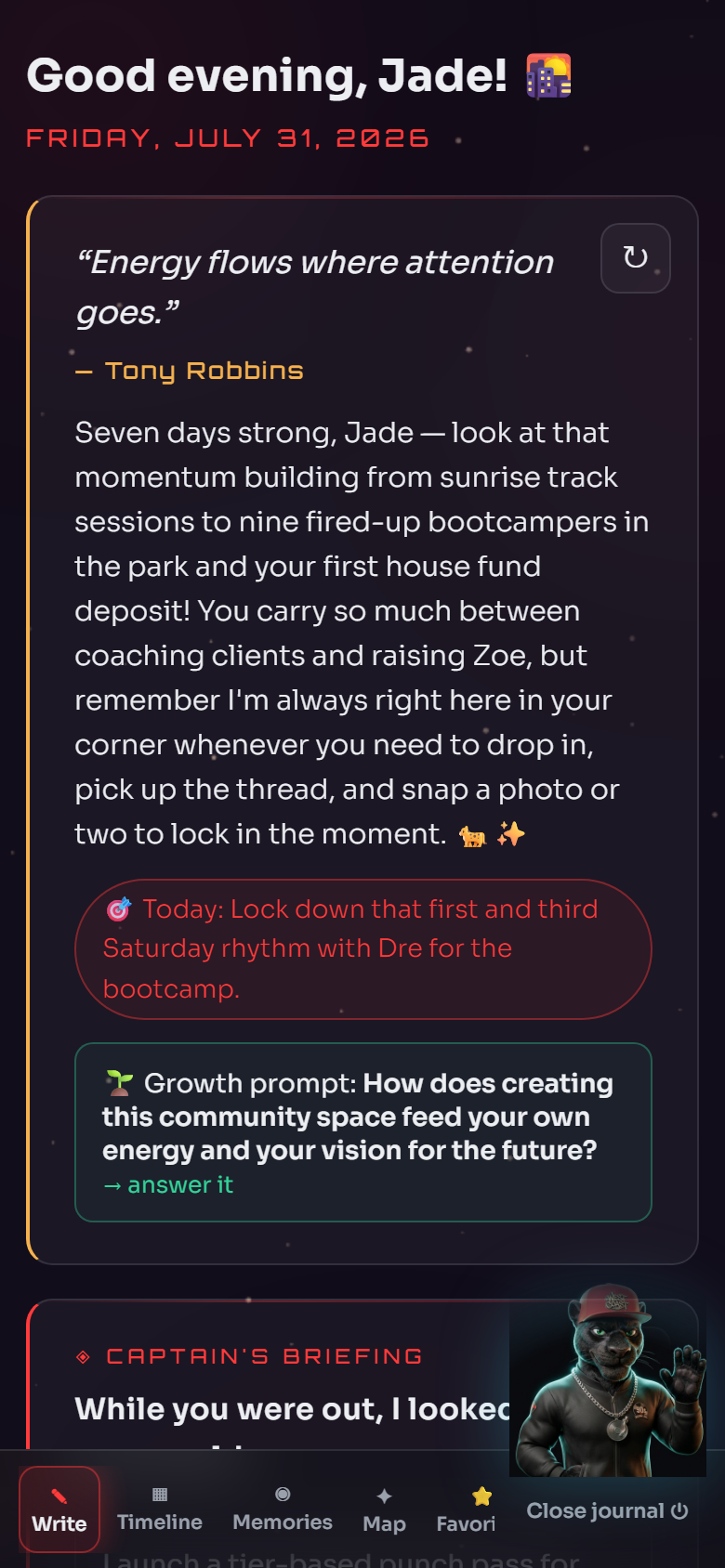
The private daily writing workspace in LIZAX JOURNAL. Use the workbook actions in this guide to carry an exercise into your own private entry.
The Four Pillars of Relational Observation
To build emotional clarity without clinical jargon, focus your journal entries on four observable elements during any interpersonal conflict or recurring cycle.
Triggers & Bodily Cues
Notice the exact words, vocal tones, or physical environments that prompt a sudden surge of defensiveness, anxiety, or emotional withdrawal.
Internal Assumptions
Unpack the narrative your brain constructs immediately following a trigger, distinguishing between raw observable facts and projected fears.
Core Unmet Needs
Identify what fundamental desire remains unexpressed beneath the conflict, whether it is reassurance, autonomy, appreciation, or physical rest.
Boundary Responses
Observe how you adjust your space, energy, or presence during tension, ensuring your boundaries protect your integrity rather than punish the other person.
Spotting Recurring Roles and Bids for Repair
In ongoing relationships, dynamics frequently crystallize into recognizable dance steps. One person acts as the pursuer, seeking immediate resolution, while the other steps into the distancer role, needing space to regulate. Alternatively, partners may rotate through roles of rescuer, critic, or victim depending on emotional stress.
Crucially, recurring conflict often hides small, subtle efforts at reconciliation—what relationship researchers refer to as repair attempts. A brief attempt at humor, a softened vocal tone, or an offer to make tea are easy to overlook when defensive walls are high. Make a note about this in your journal whenever you notice a moment where tension de-escalated, even slightly. Documenting these micro-repairs helps you identify what de-escalation strategies actually function in your specific dynamic, shifting your focus from rigid conflict scripts toward mutual recovery.
Try This in Your Journal: A 5-Step Weekly Reflection
Follow this weekly process inside LIZAX JOURNAL to track your relationship dynamics objectively over time.
1. Record a Raw Scene via Voice
Use voice input in LIZAX JOURNAL to speak freely about a recent interpersonal friction while the memory is fresh, without filtering or polishing your words [F1].
2. Separate Event Facts from Assumptions
Review your entry and separate what was objectively said or done from the internal story or intent you attributed to the other person.
3. Identify the Primary Trigger and Need
Pinpoint the exact moment your emotional state shifted, and articulate the fundamental request or boundary you required in that moment.
4. Log Key Context and People
Attach your reflection to specific people, places, or activities using searchable favorites to see if external environments impact your emotional state [F5].
5. Review Your Long-Term Patterns
Revisit past entries during your monthly review to observe whether similar triggers or communication roles recur across different weeks [F1].
Organizing Context: People, Places, and Personal Favorites
Self-reflection is far more effective when anchored in concrete contextual details rather than vague recollections. LIZAX JOURNAL provides dedicated library tools that allow members to track searchable favorites for people, songs, dishes, recipes, places, books, activities, products, and memories [F5].
When you reflect on a specific dynamic, linking your entry to a person or location helps you see whether certain physical environments or social settings systematically heighten your stress or bring out your warmest self. Importantly, your private entries remain entirely under your control; public guides or articles are never automatically copied into your personal journal entries [F2]. You maintain a clean, personalized record focused purely on your real-life experiences.
A Perspective on Candid Reflection
Reflecting with AI Guidance and Memory Boundaries
LIZAX JOURNAL integrates tailored AI coaches to help you evaluate your entries with balance and depth, while maintaining strict privacy boundaries.
Choice of AI Coaches
Select an AI guide whose tone matches your personal preference, offering a warm, candid, or practical soundboard for your emotional entries [F1].
Bounded Memory Context
Your AI coach utilizes a bounded rolling summary capped at 600 words for lasting personal facts, ensuring long-term continuity while keeping full private entries separate [F3].
Strict Memory Exclusions
Generated drafts, blog copy, scripts, research text, and coach prose are explicitly excluded from your personal memory condensation [F4].
Targeted Reflection Prompts
Ask your coach: 'Based on my recent entries about relationship stress, what recurring assumptions or repair attempts am I describing, and what open-ended question should I reflect on next?'
Understanding the Limitations of Journaling
While expressive and structured journaling is a powerful tool for personal clarity, self-awareness, and emotional well-being [S1], it is essential to acknowledge its boundary limitations. Journaling is a practice designed for self-care, personal growth, and creative reflection; it is not psychological therapy, clinical treatment, or a replacement for professional relationship counseling [S1].
Furthermore, keeping a private journal cannot single-handedly fix a dysfunctional dynamic if another person is unwilling to participate in open communication. Use your journal to gain clarity on your own agency, choices, and boundaries, while seeking qualified professional support when dealing with severe relational distress, abuse, or mental health challenges [S1].
Build Your Permanent Record of Personal Growth
Transform how you reflect on your relationships. Capture candid voice entries, organize memories with library tools, engage with personal AI coaches, and receive monthly reviews alongside a printable yearbook that documents your emotional journey over time [F1].
Why should I avoid using diagnostic labels like 'avoidant' or 'narcissist' in my private journal?
Diagnostic terms tend to summarize complex human behaviors into rigid labels, which can prevent you from seeing subtle changes, repair attempts, or your own role in a dynamic. Focusing on descriptive facts, bodily triggers, and unmet needs yields far greater clarity.
How does LIZAX JOURNAL keep my private entries secure and separated from general content?
LIZAX JOURNAL is designed so members choose what they write or save; public educational guides are never automatically copied into your private journal [F2]. Furthermore, coach memory uses a bounded 600-word summary strictly for lasting personal facts [F3].
Can journaling replace couples counseling or individual therapy?
No. While research demonstrates that expressive journaling supports emotional regulation and personal reflection [S1], it is a self-care and growth tool rather than a clinical intervention or replacement for licensed professional therapy [S1].
How can I track long-term relationship patterns over time?
You can use LIZAX JOURNAL's voice input, attach entries to searchable favorites for people and places [F5], and use monthly reviews and your printable yearbook to track emotional progress across months [F1].
FROM EDUCATION TO PERSONAL ACTION
Use this insight inside LIZAX JOURNAL
This article remains public educational content. Inside the private journal, you decide whether to apply it to your own life, save a reflection or discuss it with your coach.
Connected people and memoriesConnect reflections to the people and moments involved without automatically sharing private journal content.See how this feature works →
One Life Coach Operating SystemThe journal, memory, goals, timeline, map, favorites, coach and books are connected views—not separate journals.Explore the complete system →
Try it without an accountUse fictional sample data to feel the raw-words-to-coaching transformation. Nothing is saved and no paid AI call is made.Open the interactive demo →
Sources & verified facts
Product: A private AI journal with voice input, long-term condensed memory, a choice of coaches, photos, favorites, places, habits, emotional reflection, monthly reviews and a printable yearbook.
Private app behavior: Members choose what they write or save; public articles are not automatically copied into private journal entries.
Coach memory: The coach uses a bounded rolling summary capped at 600 words for lasting personal facts, while full private entries remain separate.
Memory exclusions: Generated drafts, blog copy, scripts, research text and the coach's prose are explicitly excluded from personal memory condensation.
Library tools: The journal supports searchable favorites for people, songs, dishes, recipes, places, books, activities, products and memories.
LIZAX JOURNAL is a personal growth and wellness tool designed for private emotional reflection, self-care, and creative expression. It does not provide medical diagnosis, clinical treatment, or psychological therapy. If you are experiencing severe emotional distress or require relationship therapy, please consult a qualified licensed professional.