A LIZAX JOURNAL visual created for this guide. The practical journal exercise appears below.
Preserving Culinary Traditions Beyond Written Recipe Cards
Traditional handwritten recipe cards often fail to capture how family dishes are actually prepared. Cooking in many households relies on sensory cues, instinct, and unwritten substitutions that rarely make it onto index cards. Creating a family recipe oral history journal bridges this gap by capturing the cook's authentic spoken voice, exact phrasing, and spontaneous memories while they prepare a meal in the kitchen [F1]. Beyond listing ingredients, an oral history documents who originally taught them the dish, what family occasions triggered its preparation, and how the recipe adapted over generations. Archival standards emphasize capturing rich contextual details alongside physical records to ensure personal history remains meaningful for future generations [S1]. By recording spoken explanations as they happen, families preserve the natural cadence, humor, and subtle wisdom of loved ones alongside their signature techniques [F1].
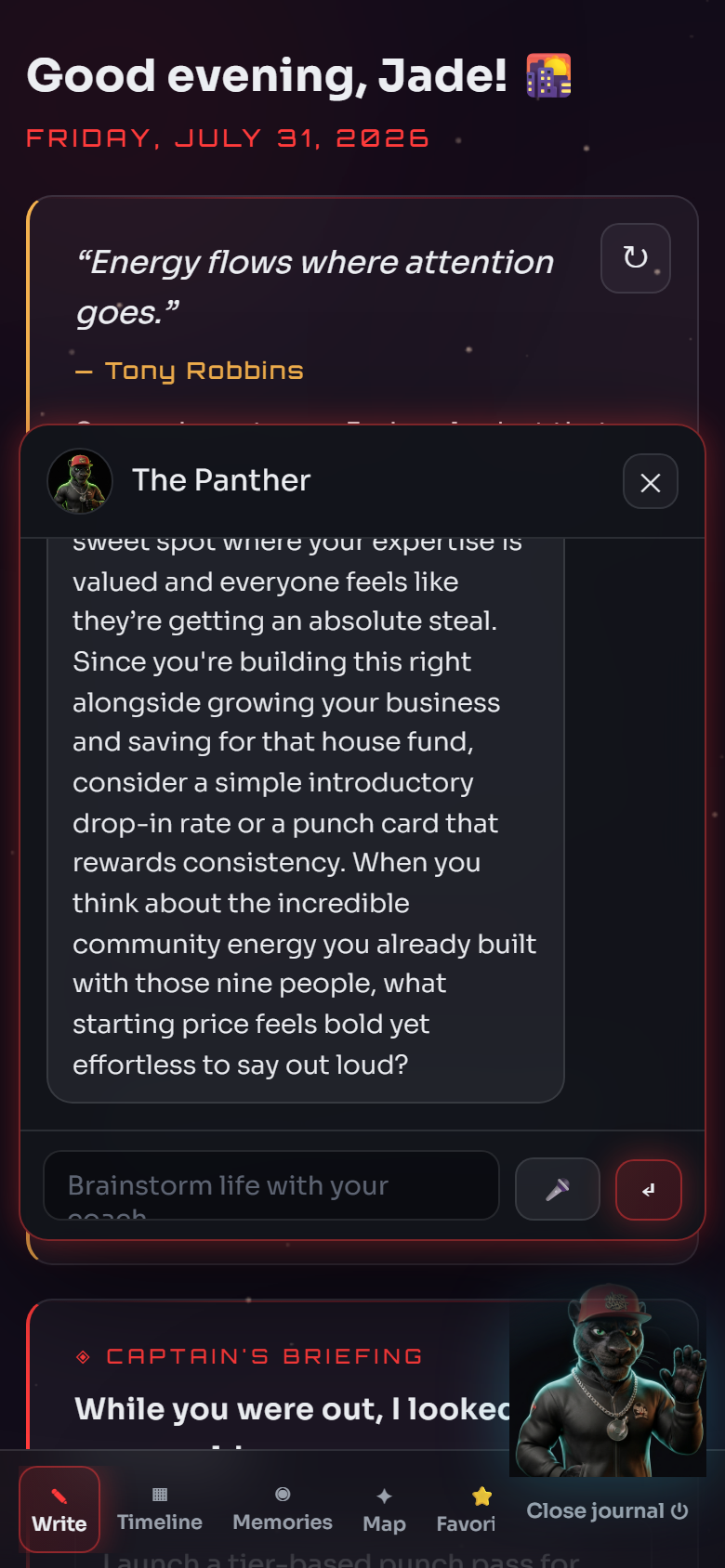
The journal's private AI coach conversation in LIZAX JOURNAL. Use the workbook actions in this guide to carry an exercise into your own private entry.
Essential Components of a Culinary Oral History Record
Documenting a dish requires capturing both practical kitchen directions and the emotional framework surrounding the meal. A complete journal entry incorporates multiple dimensions of living memory [F1, F5].
Spoken Voice and Natural Cadence
Utilize voice input to capture raw kitchen dialogue, informal phrasing, and spontaneous audio explanations spoken directly during prep work [F1].
Contextual Family Storytelling
Record the origin stories behind the dish, including holiday traditions, memorable dinners, and the relatives who passed the recipe down [F5].
Sensory Cues and Technique Notes
Document sensory visual and tactile cues—such as 'until the dough feels like an earlobe'—rather than relying solely on rigid timings [F1].
Photographic Visual Artifacts
Attach photos of handwritten recipe scraps, antique cookware, step-by-step techniques, and finished dishes to build a rich visual record [F1].
Navigating Consent, Privacy, and Uncertain Measurements
Capturing oral histories with family members requires practical methods for interpreting vague culinary instructions while maintaining clear personal boundaries [S1].
Step 1: Request Clear Informed Consent
Always inform relatives before recording their voice or stories, ensuring they understand that entries remain strictly inside your private personal journal [F2].
Step 2: Translate 'Pinches' and 'Dashes'
Observe the cook in real time and weigh or measure ingredients as they add them, documenting both their informal terms and approximate standard equivalents [F1].
Step 3: Document Known Substitutions
Ask the cook what ingredients they swap when standard items are unavailable, preserving flexible variations that kept the recipe alive across decades [F1].
Step 4: Respect Personal Privacy Boundaries
Honor off-the-record conversations or sensitive family histories, keeping private entries fully within your control [F2].
Try this in your journal
1. Open your private journal and start a new entry dedicated to a specific family dish using voice input while cooking together [F1]. 2. Speak directly into the app, describing the aroma, texture, and steps as your relative demonstrates the technique [F1]. 3. Take photographs of the preparation process, handwritten cards, and final dish, attaching them directly to the entry [F1]. 4. Tag the entry with relevant details including people, places, and recipes to index it within your searchable favorites library [F5]. 5. Review the captured record and prompt your coach to help reflect on the emotional significance of the memory [F1, F3]. Make a note about this in your journal today: Record a short voice reflection on your favorite childhood meal and the person who cooked it for you [F1, F5]. Ask your coach: 'Help me outline thoughtful interview questions to ask my family member about their signature Sunday recipe during our next visit' [F1, F3].
Preserving food heritage is not merely about archiving lists of ingredients; it is about keeping the living warmth, spoken voice, and personal stories of our elders accessible to future generations [S1]. When we listen to a loved one explain a recipe in their own words, we preserve their emotional presence alongside their culinary wisdom [F1].
The Value of Keeping Voice and Culinary Tradition Intact
Organizing Culinary Archives and Memory Libraries
A modern family recipe oral history journal transforms scattered notes, voice recordings, and photographs into a cohesive, searchable personal library [F1, F5].
Searchable Favorites and Custom Tags
Categorize entries by people, dishes, recipes, and places so you can instantly retrieve specific family traditions whenever you cook [F5].
Bounded Memory Summaries
Your chosen journaling coach maintains a bounded rolling summary capped at 600 words for core personal facts, keeping your full private entries isolated [F3].
Excluded Draft Protections
Generated drafts, research notes, and coach prose are explicitly excluded from memory condensation, protecting your raw original entries [F4].
Printable Tangible Yearbooks
Compile your collected culinary oral histories, reflections, and photographs into a beautiful printable yearbook at the end of the year [F1].
Preserve Your Family Culinary Legacy with Lizax Journal
Start capturing the authentic voices, sensory techniques, and cherished stories behind your family's favorite dishes. With private voice journaling, searchable favorites, custom reflection coaches, and printable yearbooks, Lizax Journal keeps your heritage safe and accessible for generations to come [F1, F5]. Select your preferred journaling coach, record your first culinary oral history, and safeguard your family's most meaningful food memories today [F1].
How do I handle recipes that don't have exact measurements?
Record your relative preparing the dish live and use voice journaling to describe what the food looks, smells, and feels like at each stage [F1]. You can weigh or measure ingredients as they throw them in to establish benchmark amounts while keeping their original terminology intact [F1].
Are my family voice recordings and recipe entries kept private?
Yes. Members choose what they write or save in their private journal [F2]. Coach summaries use a bounded rolling limit capped at 600 words for key personal facts without exposing full private journal text [F3].
Can I organize family recipes alongside photos and context?
Yes, Lizax Journal features searchable favorites that allow you to index dishes, recipes, people, places, and memories, complete with uploaded photographs and audio reflections [F1, F5].
How do I turn my recipe journal into a physical book?
Lizax Journal provides a printable yearbook feature that compiles your entries, reflections, and photos into a permanent physical volume for your family shelf [F1].
FROM EDUCATION TO PERSONAL ACTION
Use this insight inside LIZAX JOURNAL
This article remains public educational content. Inside the private journal, you decide whether to apply it to your own life, save a reflection or discuss it with your coach.
Connected memory systemKeep the entry, people, photographs, places and meaningful details connected to their original story.See how this feature works →
One Life Coach Operating SystemThe journal, memory, goals, timeline, map, favorites, coach and books are connected views—not separate journals.Explore the complete system →
Try it without an accountUse fictional sample data to feel the raw-words-to-coaching transformation. Nothing is saved and no paid AI call is made.Open the interactive demo →
Sources & verified facts
Product: A private AI journal with voice input, long-term condensed memory, a choice of coaches, photos, favorites, places, habits, emotional reflection, monthly reviews and a printable yearbook.
Private app behavior: Members choose what they write or save; public articles are not automatically copied into private journal entries.
Coach memory: The coach uses a bounded rolling summary capped at 600 words for lasting personal facts, while full private entries remain separate.
Memory exclusions: Generated drafts, blog copy, scripts, research text and the coach's prose are explicitly excluded from personal memory condensation.
Library tools: The journal supports searchable favorites for people, songs, dishes, recipes, places, books, activities, products and memories.