A LIZAX JOURNAL visual created for this guide. The practical journal exercise appears below.
The Myth of the Single Family Narrative
Gather three siblings around a table and ask about a childhood road trip, and you will inevitably hear three distinct accounts. One recalls an adventurous breakdown; another remembers crying over a lost toy; the third insists the trip occurred during an entirely different year. It is a fundamental truth of human connection that family stories change depending on who remembers. Rather than treating these discrepancies as errors to be corrected or arguments to be won, modern archival care and emotional synthesis suggest treating them as rich artifacts of individual perspective. Human memory does not function like a high-definition recording; it is an active, evolving narrative process filtered through personal stress, developmental age, and emotional priorities at the time an event occurred. When we insist on establishing one official version of the past, we risk erasing the legitimate internal realities of those we love. Embracing subjective, multi-voiced history allows us to construct a family archive rooted in empathy and nuanced truth rather than rigid compliance.
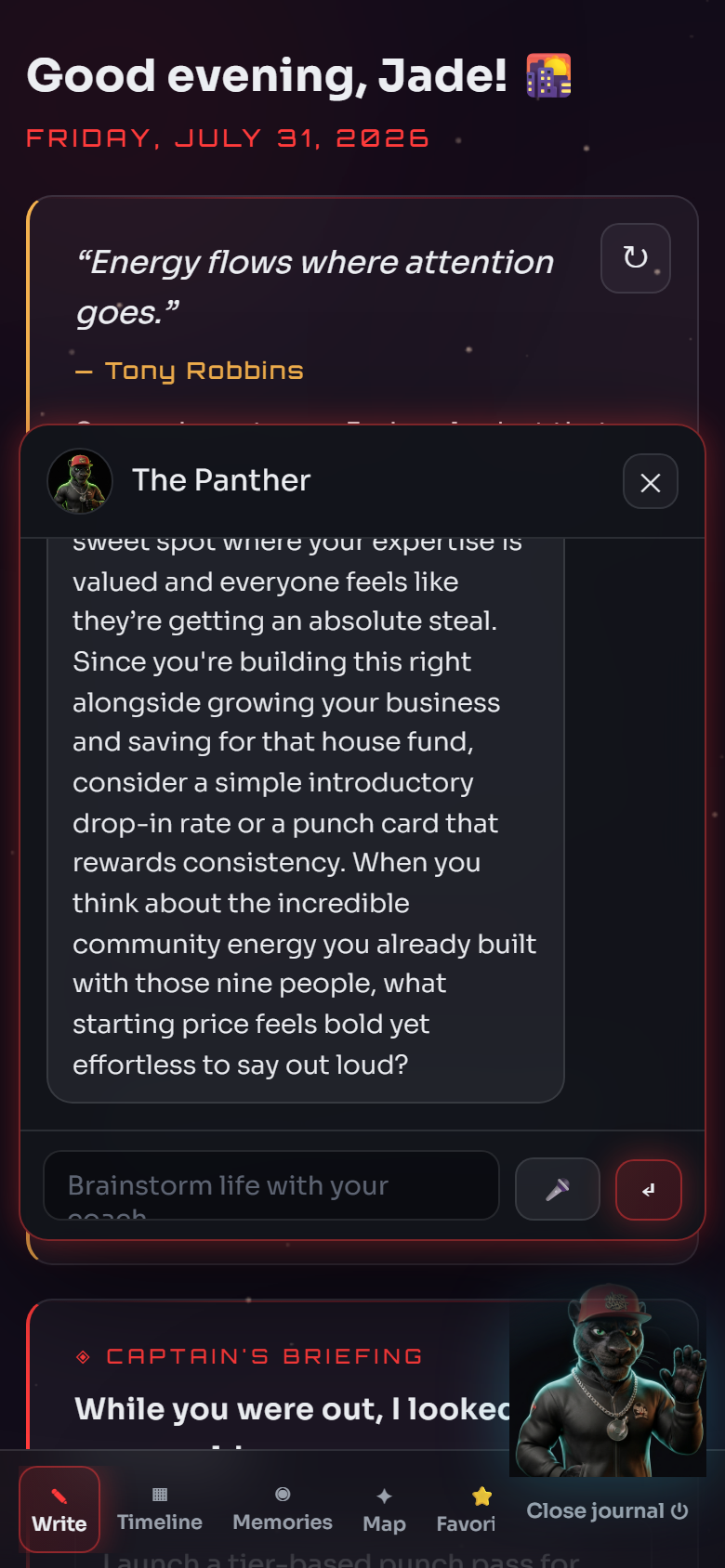
The journal's private AI coach conversation in LIZAX JOURNAL. Use the workbook actions in this guide to carry an exercise into your own private entry.
How Divergent Memories Deepen Your Shared Archive
Relinquishing the urge to adjudicate family disagreements transforms your journal into a nuanced space for multi-generational growth. Capturing diverse recollections reveals how different people processed shared milestones.
Divergence Over Denial
Documenting conflicting recollections highlights what mattered most to each participant, turning a debate over factual details into an illuminating comparison of personal priorities.
Honoring Emotional Realities
Fixating solely on timeline precision often misses the deeper point. A parent's recollection of a stressful relocation speaks to their internal anxiety at the time, regardless of historical calendar dates.
Preserving Vernacular and Tone
Stories passed down orally preserve period-specific phrasing, regional dialects, and unique humor that reveal the broader cultural context of your family's history.
Comfort with Uncertainty
Allowing accounts to remain open-ended prevents family historians from imposing contemporary assumptions onto relatives who lived under vastly different circumstances.
Try this in your journal
Follow these practical steps in your Lizax Journal to capture complex, multi-voiced family stories while preserving nuance and emotional truth.
1. Capture Your Immediate Voice Memory
Use voice input to record your raw, unfiltered account of a shared family memory directly into your journal before discussing it with others [F1]. Make a note about this in your journal right after a family event while the emotional details remain crisp.
2. Record Alternate Perspectives Thoughtfully
Create a separate reflection capturing how a sibling, parent, or partner remembers that same event. Tag both entries in your searchable library under places, dishes, or specific family members [F5].
3. Engage Your AI Coach for Nuance
Ask your coach: 'How can I reflect on these conflicting family accounts without taking sides or feeling frustrated?' Your coach uses a bounded rolling summary capped at 600 words for ongoing context while keeping private entries distinct [F3].
4. Anchor Narratives with Media and Artifacts
Attach old photos, recipes, or tagged locations to give tangible weight to disputed memories [F1, F5]. Highlight your favorite entries to feature in your monthly reviews or annual printable yearbook [F1].
Ethics, Boundaries, and Physical Archival Care
Preserving complex family stories requires balancing authentic personal expression with ethical boundaries. Not every painful memory or confidential disclosure is yours to publish broadly, and respecting consent is vital when chronicling living relatives. When working with physical family treasures—such as heirloom letters, original diaries, or delicate vintage photos—guidance from the U.S. National Archives emphasizes keeping items in cool, dry environments, using acid-free folders, and avoiding destructive adhesives or direct sunlight exposure [S1]. Digital and written reflections demand equal stewardship. Within your software environment, members choose what they write or save, and public educational articles are never automatically copied into private entries [F2]. Furthermore, strict privacy exclusions ensure that generated drafts, blog copy, scripts, research text, and coach prose are explicitly excluded from personal memory condensation [F4]. By establishing explicit boundaries and respecting physical and digital archival best practices, you ensure that recording your history remains an act of deep respect.
Architected for Private Reflection
Your Lizax Journal provides structured tools engineered specifically to foster emotional clarity, creative preservation, and absolute personal control.
600 Words
Bounded rolling summary limit used by the coach for lasting personal context [F3].
100% User Choice
Members choose what to write or save; public articles are never copied into private entries [F2].
Strict Exclusions
Drafts, research text, and coach prose are excluded from memory condensation [F4].
We believe family history is not a rigid courtroom record, but a vibrant tapestry of individual voices, emotions, and places. Real emotional clarity comes from honoring every story—even the contradictory ones—with warmth, practical structure, and total privacy [F1].
Our Archival Philosophy
Start Documenting Your Multi-Faceted Story Today
Give every voice in your shared history room to exist. Record spoken memories, save favorite places and recipes, gain perspective with custom coaches, and print a permanent annual yearbook [F1].
Why do family stories change depending on who remembers?
Family stories change because human memory is an active narrative process shaped by emotion, developmental age, focus, and personal context. Two people experiencing the same event will naturally remember different details based on what felt most significant to them.
How should I handle conflicting accounts when chronicling family history?
Rather than attempting to declare one official version, record both perspectives as valid emotional reflections. Focus on capturing context, tone, and what each narrative reveals about the speaker's personal values and emotional reality.
How does Lizax Journal keep my family reflections private?
Members explicitly choose what to write or save, and public content is never automatically copied into private journal entries [F2]. Coach memory relies on a bounded rolling summary capped at 600 words [F3], and research or generated text is explicitly excluded from memory condensation [F4].
Can I turn my digital reflections into a physical family heirloom?
Yes. Lizax Journal offers monthly reviews and a printable yearbook feature, enabling you to translate your voice entries, photos, favorites, and stories into a tangible printed archive [F1].
FROM EDUCATION TO PERSONAL ACTION
Use this insight inside LIZAX JOURNAL
This article remains public educational content. Inside the private journal, you decide whether to apply it to your own life, save a reflection or discuss it with your coach.
AI journal and contextual coachCapture the reflection in your own words and ask a coach that can use bounded, editable personal context.See how this feature works →
One Life Coach Operating SystemThe journal, memory, goals, timeline, map, favorites, coach and books are connected views—not separate journals.Explore the complete system →
Try it without an accountUse fictional sample data to feel the raw-words-to-coaching transformation. Nothing is saved and no paid AI call is made.Open the interactive demo →
Sources & verified facts
Product: A private AI journal with voice input, long-term condensed memory, a choice of coaches, photos, favorites, places, habits, emotional reflection, monthly reviews and a printable yearbook.
Private app behavior: Members choose what they write or save; public articles are not automatically copied into private journal entries.
Coach memory: The coach uses a bounded rolling summary capped at 600 words for lasting personal facts, while full private entries remain separate.
Memory exclusions: Generated drafts, blog copy, scripts, research text and the coach's prose are explicitly excluded from personal memory condensation.
Library tools: The journal supports searchable favorites for people, songs, dishes, recipes, places, books, activities, products and memories.