A LIZAX JOURNAL visual created for this guide. The practical journal exercise appears below.
Navigating Choice When Perfection Is Off the Table
Understanding how to make a decision when no option feels perfect requires shifting your mindset from finding an ideal path to choosing an acceptable set of tradeoffs. In complex personal and professional situations, perfection is rarely an available outcome. Most significant choices force us to balance competing priorities—such as stability versus growth, speed versus thoroughness, or short-term comfort versus long-term fulfillment. When you wait for a decision that carries zero downside, you risk entering decision paralysis, where time passes while your options degrade. Accepting uncertainty is not a sign of surrender; it is a practical recognition of reality. Difficult choices frequently stir up anxiety, stress, or self-doubt. Developing healthy coping strategies, practicing emotional reflection, and drawing on trusted support systems can help stabilize your perspective when facing high-stakes decisions [S1].
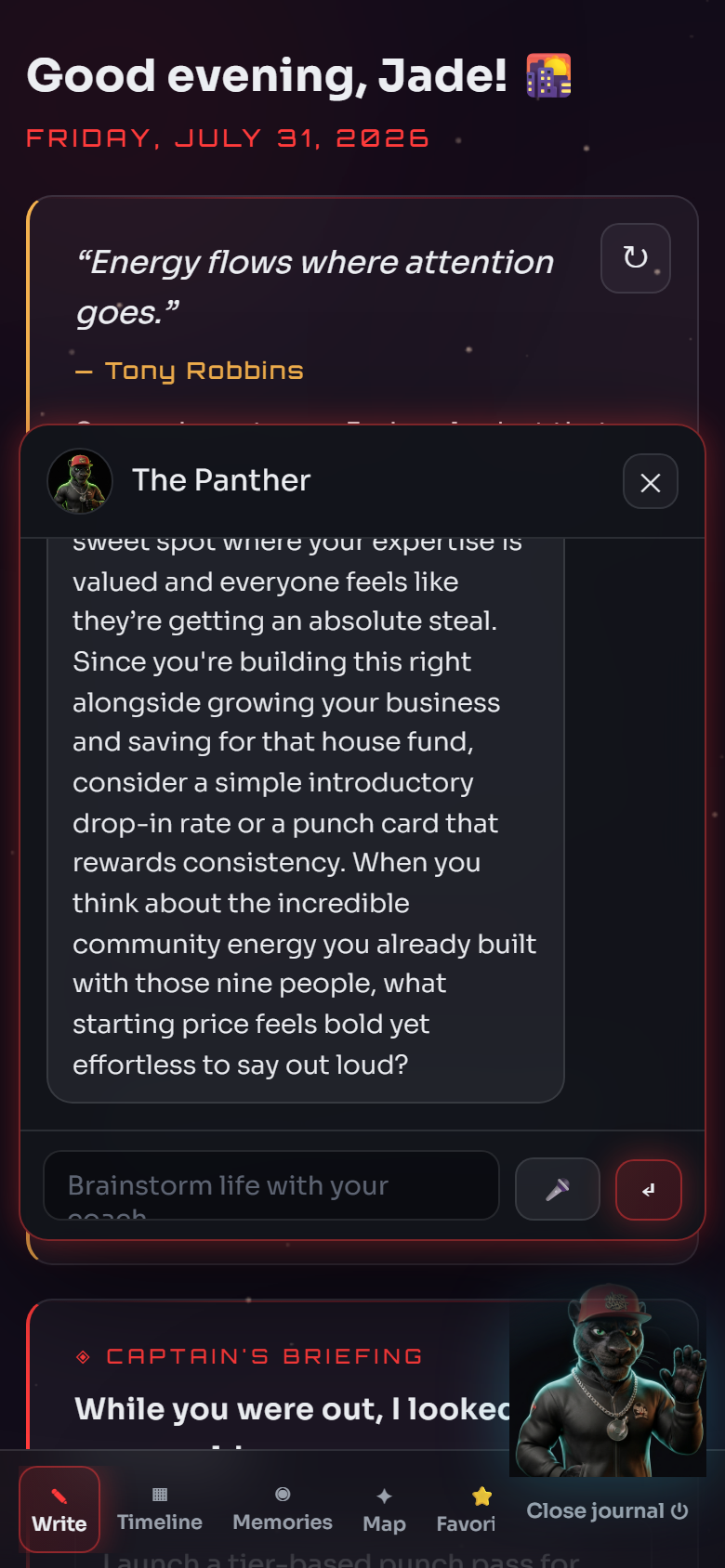
The journal's private AI coach conversation in LIZAX JOURNAL. Use the workbook actions in this guide to carry an exercise into your own private entry.
The Core Framework: Values, Reversibility, and Deadlines
To evaluate imperfect choices objectively, anchor your evaluation in three structural filters: personal values, decision reversibility, and explicit deadlines. Applying these filters prevents emotional exhaustion and brings structured clarity to ambiguous scenarios.
Values Alignment
Identify which non-negotiable principle matters most for this specific decision, acknowledging that secondary preferences may need to be sacrificed.
Reversibility Assessment
Distinguish between two-way door decisions (easily undone with minimal cost) and one-way door decisions (permanent or costly to reverse).
Information Sufficiency
Recognize the point of diminishing returns in research; gathering 70% to 80% of necessary data is often sufficient to act responsibly.
Firm Timeboxing
Set an explicit deadline for your choice to prevent open-ended deliberation from sapping your daily focus and emotional energy.
A 4-Step Process for Unsticking Hard Choices
When facing a deadlocked decision, follow this sequential process to isolate essential facts from underlying emotional noise, ensuring that your final movement is intentional and deliberate.
1. Map the Non-Negotiable Criteria
List the core requirements that any acceptable outcome must satisfy, instantly eliminating options that fail key threshold tests.
2. Explicitly Name the Tradeoffs
Write down the exact sacrifice required by each candidate option so you can choose which disadvantage you are willing to bear.
3. Evaluate the Worst-Case Scenario
Detail the realistic worst outcome for each choice and design concrete mitigation steps, demystifying abstract fears.
4. Commit and Schedule a Re-evaluation
Make the choice final for a set period, establishing a future calendar date to assess progress rather than second-guessing daily.
True confidence in decision-making does not come from knowing you picked a flawless route. It comes from knowing you evaluated your options candidly, chose your tradeoffs deliberately, and hold the emotional resilience required to navigate whatever outcomes emerge. When stress or overwhelm accompanies major life decisions, leaning into self-care routines and accessing community or professional guidance helps maintain personal balance [S1].
Finding Strength in Conscious Compromise
Try This in Your Journal
Use these interactive reflection techniques inside your private journal to transform overwhelming deliberation into structured clarity. Note that members choose what they write or save, as public web articles are not automatically copied into private entries [F2].
Record a Voice Reflection
Make a note about this in your journal: Speak candidly about your dilemma using voice input to release unedited thoughts and capture your raw emotional reflection [F1].
Catalog Non-Negotiables in Your Library
Organize your core values, places, books, and favorite principles into searchable library tools to keep your true priorities visible [F5].
Prompt Your AI Coach
Ask your coach: 'Based on my recent entries, what tradeoffs am I resisting, and which choice aligns best with my stated values?' The coach uses a bounded rolling summary capped at 600 words for lasting facts while keeping entries separate [F3], and coach prose is excluded from personal memory condensation [F4].
Track Decision Patterns Over Time
Review your emotional clarity trends during monthly reviews and archive your personal growth in a printable yearbook [F1].
Accepting Uncertainty and Understanding Limitations
No decision-making system can guarantee an absolute outcome or eliminate external volatility. Recognizing limitations is a necessary component of mature judgment. Structured reflection tools and private journaling practices foster emotional clarity and personal growth, but they are not substitutes for professional medical, financial, legal, or psychological care. If decision anxiety or life challenges significantly impair your day-to-day well-being, utilizing evidence-based coping mechanisms and seeking guidance from qualified health professionals or support helplines is an important step [S1]. Learning to live comfortably with imperfect choices involves accepting that uncertainty is a standard element of meaningful personal progress.
Document Your Growth with Lizax Journal
Gain clarity on life's complex decisions with a private AI journal featuring voice input, long-term condensed memory, a choice of reflective coaches, habits tracking, photos, monthly reviews, and a printable yearbook [F1]. Experience a secure space designed for emotional self-care and authentic reflection.
How do I know if a decision is reversible or irreversible?
A reversible decision allows you to revert to your prior state or switch directions with limited cost if conditions change. An irreversible decision involves significant permanent commitments or unrecoverable costs, requiring higher threshold scrutiny before proceeding.
What should I do when missing information causes decision paralysis?
Identify the specific critical facts needed to make a reasonable choice, set a firm deadline to gather them, and acknowledge when additional data offers diminishing utility. Managing emotional stress during uncertainty is key to moving forward [S1].
Can personal journaling help resolve difficult choices?
Yes. Expressing tradeoffs, fears, and options in writing helps deconstruct cognitive overload and clarify non-negotiable values. While journaling promotes emotional insight, it remains a self-reflection tool rather than clinical treatment [S1].
FROM EDUCATION TO PERSONAL ACTION
Use this insight inside LIZAX JOURNAL
This article remains public educational content. Inside the private journal, you decide whether to apply it to your own life, save a reflection or discuss it with your coach.
Goals and next actionsTurn what this article brings up into a prioritized goal, a supplied deadline and a smaller next step.See how this feature works →
One Life Coach Operating SystemThe journal, memory, goals, timeline, map, favorites, coach and books are connected views—not separate journals.Explore the complete system →
Try it without an accountUse fictional sample data to feel the raw-words-to-coaching transformation. Nothing is saved and no paid AI call is made.Open the interactive demo →
Sources & verified facts
Product: A private AI journal with voice input, long-term condensed memory, a choice of coaches, photos, favorites, places, habits, emotional reflection, monthly reviews and a printable yearbook.
Private app behavior: Members choose what they write or save; public articles are not automatically copied into private journal entries.
Coach memory: The coach uses a bounded rolling summary capped at 600 words for lasting personal facts, while full private entries remain separate.
Memory exclusions: Generated drafts, blog copy, scripts, research text and the coach's prose are explicitly excluded from personal memory condensation.
Library tools: The journal supports searchable favorites for people, songs, dishes, recipes, places, books, activities, products and memories.
This article is for educational and informational purposes only and does not constitute medical, mental health, legal, or financial advice. If you are experiencing severe distress or mental health challenges, please consult a qualified healthcare professional or refer to national support resources [S1].