Emotions carry real energy, but they do not have to dictate your final reality. Here is how to translate immediate feelings into useful self-knowledge without rushing to judgment.
A LIZAX JOURNAL visual created for this guide. The practical journal exercise appears below.
Why Feelings Feel Like Sentences (and How to Pause)
When a sharp wave of anxiety, frustration, or sadness lands in your chest, your mind naturally searches for an immediate explanation. In a split second, a temporary emotional spike can transform into a sweeping declaration: 'I ruined everything,' 'They do not care,' or 'I cannot handle this.' Treating internal feelings as final verdicts turns fleeting body signals into non-negotiable facts. In non-clinical self-reflection, learning how to stop turning every feeling into a verdict begins with recognizing that emotions are fast-moving information, not absolute truths. They point to temporary internal states, unexamined stress, or unmet needs. When you give yourself permission to observe an emotion before endorsing it, you create space between the impulse and your response. This brief pause allows you to evaluate your environment calmly, distinguish real events from emotional projections, and maintain emotional clarity during demanding life moments.
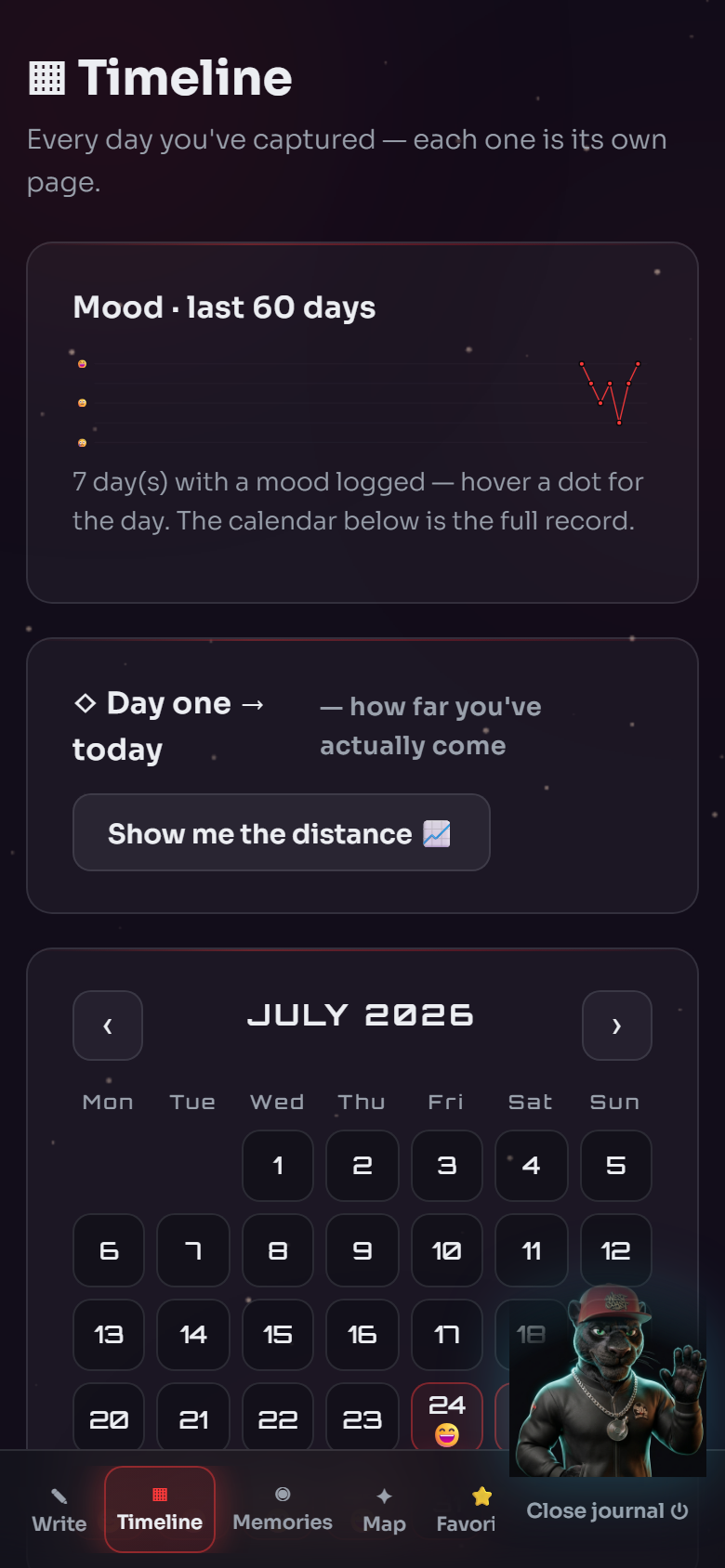
The searchable personal journal timeline in LIZAX JOURNAL. Use the workbook actions in this guide to carry an exercise into your own private entry.
The Four-Part Framework: Sensation, Story, Need, Action
To deconstruct intense emotional moments without getting consumed by them, process your experience through four distinct phases:
1. Sensation
Locate the physical experience in your body without judgment. Is your throat tight, chest heavy, or jaw clenched? Name the sensation purely as physical data.
2. Story
Identify the narrative your brain constructed about that physical response. Notice phrases like 'always' or 'never' that signal an emotional verdict taking hold.
3. Need
Ask what basic requirement is asking for attention under the story. Do you need rest, physical safety, clear boundaries, reassurance, or creative expression?
4. Action
Select one grounded, manageable step that addresses the underlying need rather than enforcing the narrative's knee-jerk judgment.
When Emotional Waves Overwhelm: Boundaries and Real-World Support
Personal writing and self-reflection tools provide valuable room for daily clarity, but they carry clear boundaries. Processing your feelings in a notebook or reflection app is designed for personal growth, daily self-care, and creative record-keeping; it is not a substitute for professional mental health treatment, crisis intervention, or medical care. When emotional distress feels persistent, disabling, or overwhelming, turning to established health resources and trained professionals is an essential self-care step. Organizations such as the Substance Abuse and Mental Health Services Administration (SAMHSA) offer official guidance and support locator services for individuals seeking professional care or coping resources [S1]. Recognizing when an emotional wave requires human support rather than solitary reflection is itself a profound act of self-awareness. Journaling supports your journey alongside professional guidance, offering a quiet environment to record your personal insights as you navigate life.
Try this in your journal
Use your private Lizax Journal [F1] to practice separating immediate feelings from final verdicts through structured entries:
Step 1: Record a raw voice note
Speak your immediate thoughts into Lizax Journal using voice input during moments of frustration or overwhelm [F1].
Step 2: Tag the entry for emotional reflection
Categorize your voice recording under emotional reflection to track recurring mood patterns over time [F1].
Step 3: Map the sensation and story
Write down the exact physical feeling in your body alongside the narrative your mind automatically created.
Step 4: Save key context to your library
Log supportive places, trusted people, or grounding activities in your searchable favorites library to revisit when feelings run high [F5].
Reflecting on Patterns Over Time
One of the most effective ways to dissolve automatic verdicts is observing how quickly internal states shift over weeks and months. Lizax Journal preserves your private entries separately while using a bounded rolling summary capped at 600 words so your chosen AI coach remembers key personal context without storing raw daily drafts [F1][F3]. Furthermore, system-generated drafts, blog posts, research notes, and coach responses are strictly excluded from your personal memory condensation, ensuring your core archive remains authentic to your voice [F4]. Members always retain full ownership over what they write or save, meaning public reading materials are never automatically inserted into personal journals [F2]. Through automated monthly reviews and optional printed yearbooks, you can look back across time and see concrete evidence: feelings that once felt permanent were simply passing weather [F1].
Prompts to Explore with Your AI Coach
Here are actionable ways to explore your feelings and archive meaningful insights in your private journal space:
Ask your coach prompt
'Ask your coach: I am feeling an intense spike of anxiety about a recent conversation. Can you help me break down what part is physical sensation and what part is a story I am telling myself?'
Make a note about this in your journal
Make a note about this in your journal: Write down three recent situations where your emotional initial verdict turned out to be inaccurate.
Grounding library check
Save a favorite comforting song, peaceful place, or go-to recipe into your searchable library tools so you have quick access to restorative habits when stressed [F1][F5].
Build Your Personal Space for Emotional Clarity
Give your feelings room to speak without letting them write the final rulebook. Start keeping a beautiful, permanent record of your personal growth, habits, photos, and reflections with Lizax Journal today [F1].
What does it mean to turn a feeling into a verdict?
Turning a feeling into a verdict means treating a temporary emotional state—like anger, shame, or fear—as an absolute, unchangeable fact about your character, worth, or future.
How does journaling help separate emotions from facts?
Journaling forces a physical pause. Putting thoughts into words lets you observe your internal narrative objectively, helping you distinguish bodily sensations from stories and real-world facts.
Is Lizax Journal a replacement for therapy?
No. Lizax Journal is a personal self-care, reflection, and creative memory tool [F1]. It is non-clinical and not a substitute for professional mental health counseling or crisis intervention services [S1].
How does Lizax handle private entry memories?
Lizax keeps your full private entries separate while generating a bounded rolling summary capped at 600 words for long-term personal facts used by your chosen coach [F1][F3]. Drafts and research copy are explicitly excluded from personal memory [F4].
FROM EDUCATION TO PERSONAL ACTION
Use this insight inside LIZAX JOURNAL
This article remains public educational content. Inside the private journal, you decide whether to apply it to your own life, save a reflection or discuss it with your coach.
AI journal and contextual coachCapture the reflection in your own words and ask a coach that can use bounded, editable personal context.See how this feature works →
One Life Coach Operating SystemThe journal, memory, goals, timeline, map, favorites, coach and books are connected views—not separate journals.Explore the complete system →
Try it without an accountUse fictional sample data to feel the raw-words-to-coaching transformation. Nothing is saved and no paid AI call is made.Open the interactive demo →
Sources & verified facts
Product: A private AI journal with voice input, long-term condensed memory, a choice of coaches, photos, favorites, places, habits, emotional reflection, monthly reviews and a printable yearbook.
Private app behavior: Members choose what they write or save; public articles are not automatically copied into private journal entries.
Coach memory: The coach uses a bounded rolling summary capped at 600 words for lasting personal facts, while full private entries remain separate.
Memory exclusions: Generated drafts, blog copy, scripts, research text and the coach's prose are explicitly excluded from personal memory condensation.
Library tools: The journal supports searchable favorites for people, songs, dishes, recipes, places, books, activities, products and memories.
This article is for educational and self-reflection purposes only and does not constitute clinical mental health advice or medical diagnosis. If you are experiencing overwhelming emotional distress, please consult a qualified healthcare professional or utilize support resources like SAMHSA [S1].