A LIZAX JOURNAL visual created for this guide. The practical journal exercise appears below.
Untangling Uncertainty: Facts Versus Stories in Your Mind
When you face unexpected change or ambiguous news, the human mind naturally fills in the blanks. It creates dramatic stories, assumes worst-case outcomes, and mistakes emotional foreboding for hard evidence. This pattern often leads to unnecessary stress and cognitive paralysis. Practicing a structured facts versus stories uncertainty journal exercise allows you to pause that internal narrative and look directly at what is actually happening. Scientific literature indicates that structured journaling can serve as an effective self-care tool for managing stress and regulating difficult emotions [S2]. By visually laying out objective observations next to your internal interpretations, you shift your brain out of reactive panic and back into thoughtful evaluation. You begin to recognize that while you cannot control every external variable, you retain full control over how you perceive, evaluate, and respond to the present moment.
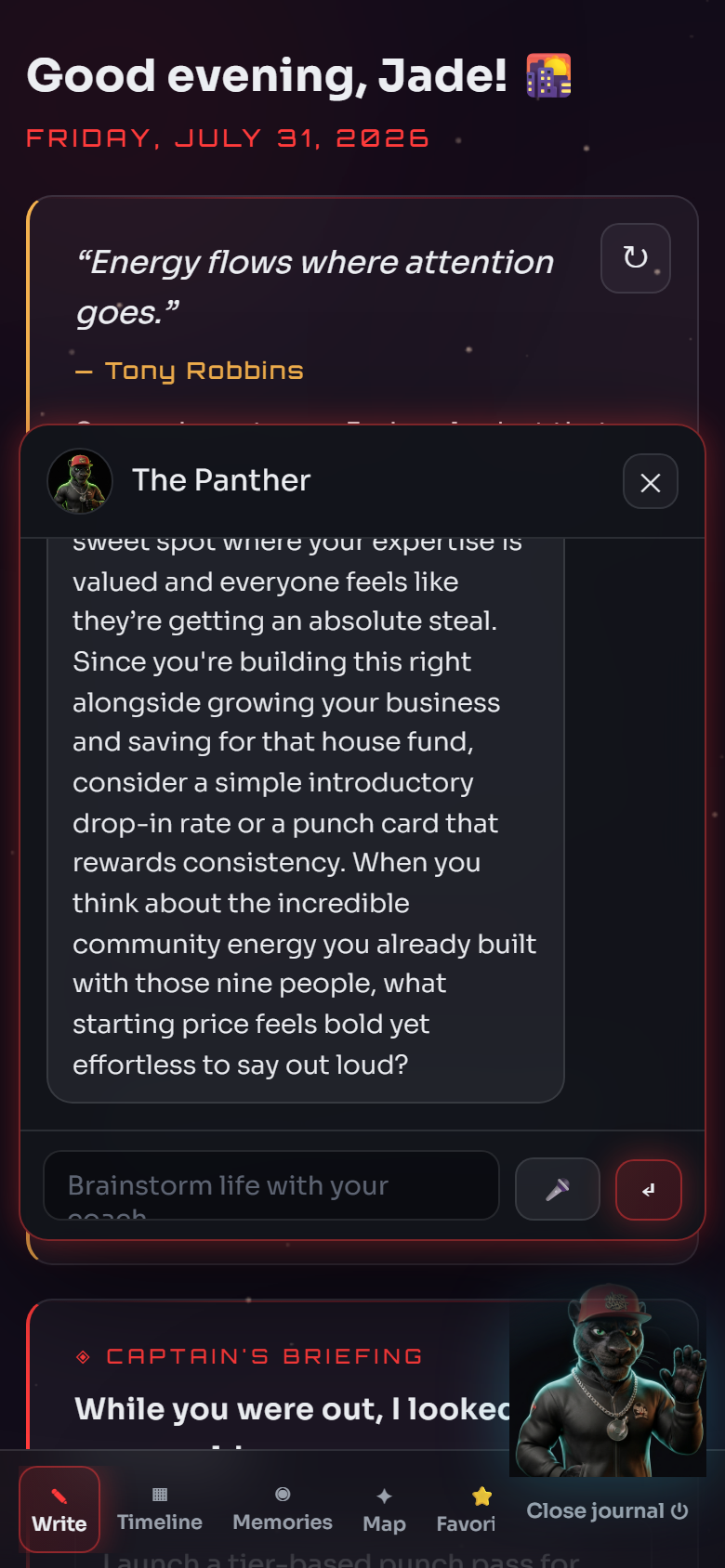
The journal's private AI coach conversation in LIZAX JOURNAL. Use the workbook actions in this guide to carry an exercise into your own private entry.
Try this in your journal: The 4-Step Clarity Exercise
Use this non-clinical reflection process inside your private AI journal with voice input or text [F1] whenever ambiguity feels overwhelming.
1. Write the Observable Facts
List only what a video camera could capture. Record exact quotes, dates, or actions without adding tone, intention, or personal interpretation.
2. Unpack the Mind's Story
Document the narrative your brain is building around those facts. Identify your fears, catastrophic predictions, and assumptions about what others think.
3. Identify What is Controllable
Separate external unknowns from elements within your direct sphere of influence, such as your sleep, boundaries, communication, and immediate habits.
4. Commit to One Next Action
Choose a single, realistic step you can execute today to move forward with composure, regardless of how the broader situation unfolds.
Organizing Your Reflection with LIZAX JOURNAL Tools
LIZAX JOURNAL offers specialized features designed to keep your personal clarity exercises organized, private, and actionable over time [F1].
Private & Autonomous Entry
You maintain complete ownership of what you record; public articles are never automatically pushed into your personal space [F2].
Focused Memory Boundaries
AI coaches utilize a bounded rolling summary capped at 600 words for core personal facts, keeping long-form entries distinct [F3].
Targeted Memory Exclusions
Generated drafts, research notes, and coach responses are explicitly excluded from your permanent condensed memory [F4].
Searchable Resource Library
Catalog supportive places, books, dishes, activities, and memories to draw strength when navigating life transitions [F5].
Prompts for Deepening Your Reflection
To build an ongoing habit of emotional groundedness, integrate quick prompts into your routine. Make a note about this in your journal whenever you catch yourself making assumptions: 'What objective facts do I actually possess right now, and what am I inventing out of fear?' When engaging with an interactive reflection assistant, try this prompt: 'Ask your coach to help you separate your observable realities from your emotional projections in today's entry.' As you reflect, the assistant references a bounded rolling summary of up to 600 words covering lasting facts [F3], while keeping your full private entry logs separate. Furthermore, administrative drafts, public articles, and research text are strictly excluded from personal memory summaries [F4]. This ensures your personal reflection space remains authentic, uncluttered, and tailored specifically to your personal development journey.
Clarity does not come from controlling the future; it comes from unburdening the present of stories that haven't happened.
A Grounded Perspective on Personal Reflection
Knowing When to Seek Human Support
While writing in a private journal is a valuable tool for emotional clarity and self-reflection [S2], it is important to recognize its scope and limits. Reflective journaling is a non-clinical personal growth practice, not a substitute for professional mental health care, medical diagnosis, or psychological treatment. If you find yourself experiencing severe anxiety, prolonged depression, or overwhelming distress, self-guided exercises alone may not be sufficient. Professional care offers personalized guidance and clinical support that a journal cannot provide. Organizations like the Substance Abuse and Mental Health Services Administration (SAMHSA) provide comprehensive guidance and resources for finding qualified mental health professionals and support services in your area [S1]. Always reach out to licensed healthcare providers when dealing with mental health challenges or severe distress.
Start Building Your Personal Record of Clarity
Capture your daily voice notes, track habits, reflect deeply, and create a beautiful permanent archive of your personal evolution with LIZAX JOURNAL [F1].
What is the primary goal of a facts versus stories journal exercise?
The goal is to separate verifiable, objective reality from internal assumptions and emotional projections, reducing anxiety and revealing immediate, actionable steps.
How does LIZAX JOURNAL protect my personal reflection data?
LIZAX JOURNAL is a private app where members choose what to write or save [F2]. AI coach memory relies on a capped 600-word summary for key personal facts, keeping raw entries separate [F3].
Can journaling replace professional mental health treatment?
No. While research demonstrates journaling supports general emotional well-being and stress management [S2], it is a non-clinical wellness tool and not a substitute for professional mental health care or crisis intervention [S1].
FROM EDUCATION TO PERSONAL ACTION
Use this insight inside LIZAX JOURNAL
This article remains public educational content. Inside the private journal, you decide whether to apply it to your own life, save a reflection or discuss it with your coach.
Connected memory systemKeep the entry, people, photographs, places and meaningful details connected to their original story.See how this feature works →
One Life Coach Operating SystemThe journal, memory, goals, timeline, map, favorites, coach and books are connected views—not separate journals.Explore the complete system →
Try it without an accountUse fictional sample data to feel the raw-words-to-coaching transformation. Nothing is saved and no paid AI call is made.Open the interactive demo →
Sources & verified facts
Product: A private AI journal with voice input, long-term condensed memory, a choice of coaches, photos, favorites, places, habits, emotional reflection, monthly reviews and a printable yearbook.
Private app behavior: Members choose what they write or save; public articles are not automatically copied into private journal entries.
Coach memory: The coach uses a bounded rolling summary capped at 600 words for lasting personal facts, while full private entries remain separate.
Memory exclusions: Generated drafts, blog copy, scripts, research text and the coach's prose are explicitly excluded from personal memory condensation.
Library tools: The journal supports searchable favorites for people, songs, dishes, recipes, places, books, activities, products and memories.
This article is for educational and self-reflection purposes only and does not constitute clinical advice, medical diagnosis, or treatment. If you are experiencing mental health distress, please consult a qualified healthcare professional or contact SAMHSA resources for support [S1].