Loss rarely moves in predictable stages or neat resolution. Here is how to honor your non-linear experience with candid self-reflection and compassionate care.
A LIZAX JOURNAL visual created for this guide. The practical journal exercise appears below.
The Myth of Neat Eras: Understanding Non-Linear Loss
Popular culture often presents grieving as a neat five-step process that moves smoothly from acute sadness to quiet acceptance. In real life, grief does not follow a clean timeline. A person may feel steady and grounded for several months, only to experience a wave of sharp, intense sorrow triggered by a familiar song, a specific scent, or an unexpected calendar date. These sudden shifts are not signs of personal failure or regression; they are natural characteristics of human attachment and memory. Attempting to force emotional healing into a rigid schedule creates unnecessary shame during already difficult seasons. Writing candidly about your current reality allows you to record feelings without judgment, creating a true record of your inner life rather than an idealized version [F2].
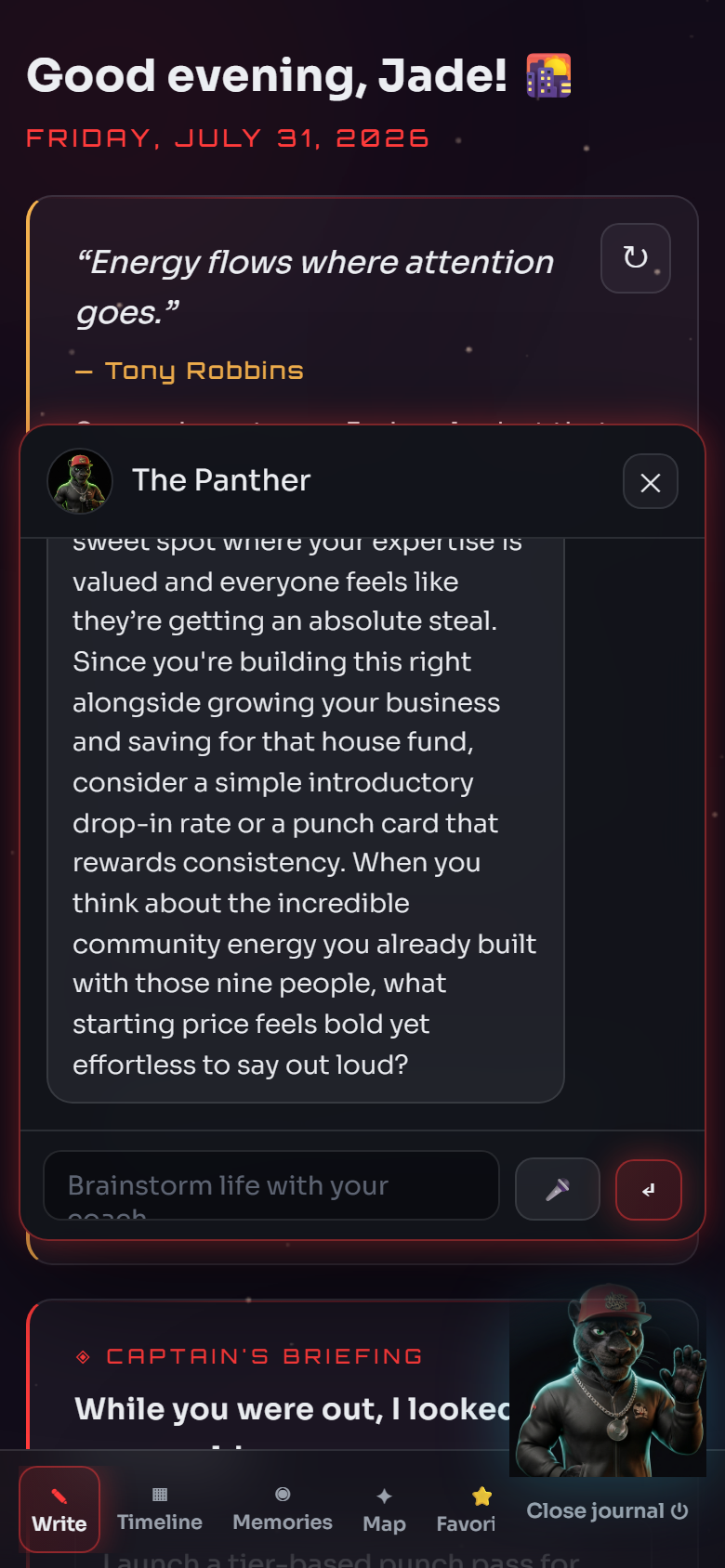
The journal's private AI coach conversation in LIZAX JOURNAL. Use the workbook actions in this guide to carry an exercise into your own private entry.
Supporting Your Inner World Through Unpredictable Seasons
Navigating loss requires flexible tools that meet you wherever you are on a given day, whether you feel articulate, exhausted, or silent.
Capturing Unfiltered Thoughts
Voice input allows you to speak your feelings aloud when typing or writing by hand feels too physically draining [F1].
Anchoring Cherished Memories
Use searchable library tools to keep meaningful photos, songs, and places organized in your private space [F5].
Quiet Memory Continuity
Long-term condensed memory keeps a bounded 600-word index of key context while keeping raw daily logs private [F3].
Try this in your journal
Use this structured self-reflection sequence when navigating difficult anniversaries, sudden emotional surges, or tender days.
1. Speak or Write Without Formatting
Open Lizax Journal and use voice input or quick text to record exactly what today felt like without forcing positivity [F1].
2. Save a Sacred Detail
Tag a specific favorite song, recipe, or place in your library to honor a clear detail of what you love and remember [F5].
3. Make a Note About This in Your Journal
Write down: 'Today brought up unexpected feelings about [event/person]. I am giving myself permission to move slowly without a deadline.'
4. Ask Your Coach
Select your preferred AI coach and prompt: 'How can I gently navigate an unexpected anniversary reaction today?' [F1]
Grief is not a problem to be solved or a project to complete; it is an ongoing relationship with what you loved. Having a private space to record the honest texture of your days allows you to move at your own pace.
A Quiet Space for Candid Reflection
Knowing When to Pause Reflection and Seek Human Help
Journaling is a practical practice for clarity, self-care, and personal reflection, but writing alone does not heal deep grief or resolve clinical trauma [S1]. It is critical to recognize when self-reflection turns into circular, isolating rumination. If you feel persistently overwhelmed, unable to perform basic routines, or disconnected from safety, pause your journaling practice and reach out for direct human support [S1]. Organizations such as SAMHSA provide reliable public resources for coping with mental health distress and finding professional care in your area [S1]. Lizax Journal protects your personal boundaries by ensuring public educational guides are never forcibly copied into your personal memory log [F2], allowing you full autonomy over when you choose to reflect and when you step back to seek professional guidance.
Thoughtful Features Built for Long-Term Clarity
Documenting your journey over years requires a balance between intelligent assistance and strict personal privacy.
Voice & Habit Tracking
Reflect on emotional trends, daily habits, and personal milestones across monthly reviews [F1].
Strict Privacy Boundaries
Coach summaries exclude draft copy, blog copy, scripts, and research text from personal memory memory generation [F4].
Printable Yearbook Keepsake
Transform selected photos, entries, and favorite memories into a beautiful, permanent physical book [F1].
Honoring Your Journey on Your Own Terms
Build a stylish, permanent record of your life with private voice reflections, custom coaching, and long-term memory support.
No. Grief does not follow a clean timeline or universal stages. Emotional responses fluctuate naturally over months and years based on personal context, triggers, and memory.
Can journaling replace grief therapy or counseling?
No. Journaling is a tool for self-reflection and personal growth, not medical treatment. Deep emotional distress should be supported by professional human resources like SAMHSA [S1].
How does Lizax Journal handle my private reflections?
Your entries remain private. Public articles are not automatically copied into your journal [F2], and coach memory uses a strictly bounded 600-word summary that excludes external research text [F3, F4].
FROM EDUCATION TO PERSONAL ACTION
Use this insight inside LIZAX JOURNAL
This article remains public educational content. Inside the private journal, you decide whether to apply it to your own life, save a reflection or discuss it with your coach.
Connected memory systemKeep the entry, people, photographs, places and meaningful details connected to their original story.See how this feature works →
One Life Coach Operating SystemThe journal, memory, goals, timeline, map, favorites, coach and books are connected views—not separate journals.Explore the complete system →
Try it without an accountUse fictional sample data to feel the raw-words-to-coaching transformation. Nothing is saved and no paid AI call is made.Open the interactive demo →
Sources & verified facts
Product: A private AI journal with voice input, long-term condensed memory, a choice of coaches, photos, favorites, places, habits, emotional reflection, monthly reviews and a printable yearbook.
Private app behavior: Members choose what they write or save; public articles are not automatically copied into private journal entries.
Coach memory: The coach uses a bounded rolling summary capped at 600 words for lasting personal facts, while full private entries remain separate.
Memory exclusions: Generated drafts, blog copy, scripts, research text and the coach's prose are explicitly excluded from personal memory condensation.
Library tools: The journal supports searchable favorites for people, songs, dishes, recipes, places, books, activities, products and memories.
Lizax Journal is a personal self-reflection app and educational platform, not a licensed mental health service or medical provider. If you are experiencing overwhelming grief or emotional crisis, please contact SAMHSA or a qualified healthcare professional.