What to Write When You Feel Overwhelmed and Cannot Organize Your Thoughts
When mental chatter takes over, you do not need perfect prose or grand solutions. You simply need a quiet page and a practical framework to clear the noise.
A LIZAX JOURNAL visual created for this guide. The practical journal exercise appears below.
When Your Brain Feels Like Too Many Open Tabs
When overwhelming pressure mounts, the human mind often experiences a form of internal cognitive traffic. Ideas, unresolved tasks, emotional reactions, and hypothetical scenarios compete for immediate attention all at once. In this heightened state, attempting to force your thoughts into neat, sequential sentences often feels impossible. The purpose of an emotional clarity journal is not to compose polished essays or arrive at life-altering conclusions in a single sitting. Instead, it serves as a secure external hard drive where you can unload mental static safely.
By translating swirling internal loops into physical or digital text, you interrupt the brain's urge to re-process the exact same anxieties repeatedly. Systematic research into structured expressive writing and reflective practices indicates that deliberate journaling can significantly reduce perceived stress and support emotional self-regulation by providing a structured container for difficult experiences [S2]. When you give your thoughts a place to land, you transition from passively experiencing cognitive chaos to actively observing and managing your life with calm intention.
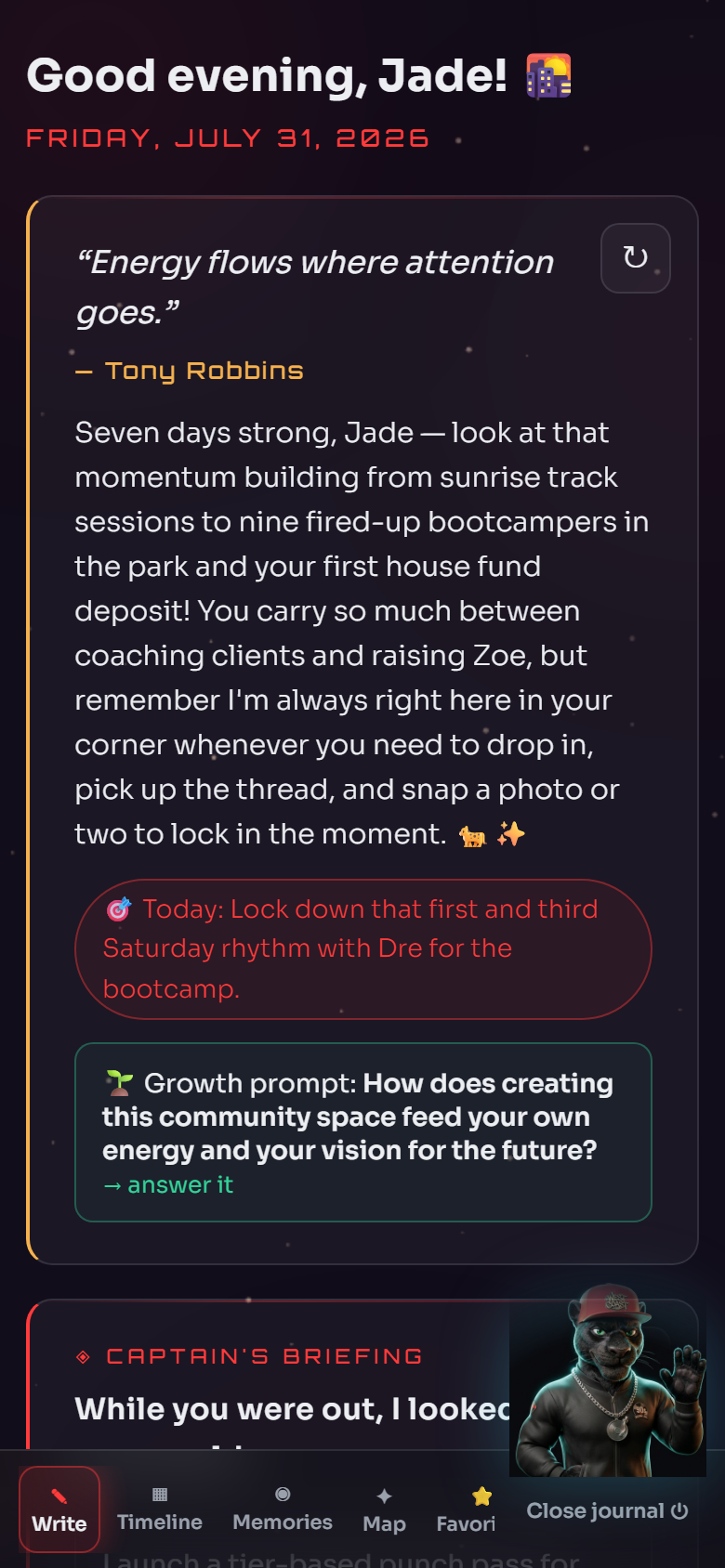
The private daily writing workspace in LIZAX JOURNAL. Use the workbook actions in this guide to carry an exercise into your own private entry.
The Two-Minute Grounding Entry
When you are too scattered to outline complex thoughts, start with immediate sensory realities. This rapid protocol lowers your nervous system's alarm response and anchors your focus directly in the present moment.
1. Anchor in Your Physical Present
Look around your immediate space and record three neutral, physical facts (for example: 'The desk surface is cool,' 'Steam is rising from the mug,' or 'Light is entering through the side window').
2. State Your Immediate Physical Reality
Write one simple, unedited sentence starting with: 'Right now, my body feels...' Name physical sensations like tension in the shoulders or shallow breathing without attempting to fix or judge them.
3. Perform an Unfiltered Thought Dump
Spend 60 seconds listing every fragmented errand, lingering concern, or random thought floating in your head. Do not organize, spell-check, or evaluate—simply offload the noise.
Sorting Reality: Facts Versus Fears
Overwhelm thrives on ambiguity. When an unorganized thought sits inside your head, your mind frequently conflates raw objective facts with worst-case emotional projections. A deadline three days away morphs into an imagined professional failure; an unreturned message feels like a broken relationship. Journaling allows you to draw a firm boundary between what is objectively happening right now and what your anxiety is predicting.
To apply this in your entry, divide your page into two clear columns or simple bulleted sections: 'Verified Facts' and 'Anxious Fears.' Under Facts, list only items that could be proven in a court of law—deadlines, calendar commitments, budget figures, or physical symptoms. Under Fears, write down the catastrophizing assumptions, internal self-criticisms, or worst-case scenarios your mind is constructing. Once written down side-by-side, you will notice that facts are usually manageable and finite, while fears are speculative loops that do not require immediate action.
Filtering Your Workload: Must-Do vs. Can-Wait
When everything feels urgent, nothing is truly prioritized. Use this practical step-by-step sorting method to shrink your massive list down to actionable reality.
1. Isolate the Immediate Essentials
Select a maximum of two tasks that strictly require your personal attention within the next three hours. Label these as your non-negotiable Must-Dos.
2. Shift Everything Else to 'Can-Wait'
Move aspirational projects, optional correspondence, perfectionist polishes, and low-priority chores onto a distinct 'Can-Wait' shelf for tomorrow or later in the week.
3. Define the Smallest Possible Action Step
Take your top Must-Do item and break it down until the next action takes under five minutes to initiate (for example: 'Open the spreadsheet document' instead of 'Finish quarterly report').
Recognizing Boundaries and Seeking Human Support
Journaling is a powerful tool for personal reflection, self-awareness, and cognitive clarity, but understanding its role and boundary limits is vital for overall wellbeing.
Drafting Honest Requests for Help
Use your private journal space to clarify what specific support you need before communicating with friends, family members, or colleagues. Writing out your request first helps you state boundaries clearly and without panic.
Distinguishing Reflection from Clinical Care
While regular journal writing offers robust benefits for emotional clarity, it is an individual self-reflection tool, not a medical treatment or substitute for professional healthcare [S1].
Connecting with Qualified Support
If personal overwhelm becomes persistent, paralyzing, or unmanageable on your own, connecting with qualified medical professionals or crisis support services is a critical step [S1].
Try This in Your Journal
Put these strategies into immediate practice using the specific reflection tools and flexible organization tools inside Lizax Journal.
1. Speak Your Mind with Voice Input
When typing or writing feels like too much physical effort, open Lizax Journal and use voice input to speak freely [F1]. Let your thoughts pour out naturally while the app captures every word [F1].
2. Capture Tangible Habits and Places
Anchor your entry to your actual day by logging your current habits, physical places, and emotional state directly within your entry [F1].
3. Save Grounding Favorites for Later
Build a personal sanctuary in your searchable favorites library [F5]. Save comforting music, favorite books, go-to recipes, or peaceful places so you can quickly access grounding influences whenever stress strikes [F5].
4. Reflect on Trends with Monthly Reviews
Revisit your emotional reflection entries and monthly reviews over time to spot recurring triggers, notice personal resilience, and celebrate ongoing growth [F1].
Using Your AI Coach Safely and Effectively
When you struggle to make sense of your internal state, an AI coach can serve as a supportive sounding board to help structure your reflection.
Prepared 'Ask Your Coach' Prompt
Copy and paste this exact prompt to your AI coach inside Lizax Journal: 'I am feeling completely overwhelmed by my current workload and thoughts. Help me review what I just wrote and break it down into three objective facts, one immediate priority, and one thing I can safely drop for today.'
Choose Your Coaching Perspective
Lizax Journal offers a choice of AI coaches [F1]. Select a coaching style that fits your current mood—whether you prefer a gentle, empathetic guide or a structured, task-focused mentor [F1].
Strict Privacy and Memory Boundaries
Your coach references a bounded rolling summary capped at 600 words for lasting personal facts [F3], while your full private entries remain separate [F3]. External copy, research text, and coach prose are explicitly excluded from memory condensation [F4], and public articles are never automatically copied into your private journal [F2].
Journaling is not about performing for an audience or producing polished literature; it is about offering yourself an unfiltered mirror where chaos can quietly settle into clarity.
A Permanent Record of Quiet Resilience
Start Restoring Your Focus Today
Capture your voice, organize your thoughts, and create a permanent, beautiful record of your personal growth with private AI support.
What should I write first when my mind feels completely chaotic?
Start with a simple two-minute physical grounding check. List three physical objects around you, describe how your body currently feels, or use voice input in Lizax Journal to vent spoken thoughts without worrying about order or structure [F1].
How does writing down thoughts help reduce overwhelming feelings?
Writing transfers high cognitive load out of short-term memory onto an external surface. This distance allows you to distinguish objective facts from catastrophic fears and prioritize immediate actions over non-urgent distractions [S2].
Is an AI journal a substitute for clinical therapy or medical advice?
No. Journaling and AI coaching are personal self-reflection and wellness tools, not medical treatments or clinical therapies. If you are experiencing overwhelming distress or mental health challenges, please reach out to qualified human support and healthcare professionals [S1].
How does Lizax Journal safeguard my entry privacy and coach interaction?
Your entries remain private and under your control [F2]. The AI coach utilizes a bounded rolling memory capped at 600 words for personal facts [F3], while generated drafts, blog copy, and coach prose are strictly excluded from personal memory memory updates [F4].
FROM EDUCATION TO PERSONAL ACTION
Use this insight inside LIZAX JOURNAL
This article remains public educational content. Inside the private journal, you decide whether to apply it to your own life, save a reflection or discuss it with your coach.
Connected memory systemKeep the entry, people, photographs, places and meaningful details connected to their original story.See how this feature works →
One Life Coach Operating SystemThe journal, memory, goals, timeline, map, favorites, coach and books are connected views—not separate journals.Explore the complete system →
Try it without an accountUse fictional sample data to feel the raw-words-to-coaching transformation. Nothing is saved and no paid AI call is made.Open the interactive demo →
Sources & verified facts
Product: A private AI journal with voice input, long-term condensed memory, a choice of coaches, photos, favorites, places, habits, emotional reflection, monthly reviews and a printable yearbook.
Private app behavior: Members choose what they write or save; public articles are not automatically copied into private journal entries.
Coach memory: The coach uses a bounded rolling summary capped at 600 words for lasting personal facts, while full private entries remain separate.
Memory exclusions: Generated drafts, blog copy, scripts, research text and the coach's prose are explicitly excluded from personal memory condensation.
Library tools: The journal supports searchable favorites for people, songs, dishes, recipes, places, books, activities, products and memories.
This article is for educational and informational purposes only and does not constitute medical advice, diagnosis, or clinical treatment. Journaling and AI coaching are self-care tools designed for personal reflection. If you are experiencing severe psychological distress or a mental health crisis, please consult a licensed healthcare professional or access official support services [S1].