When Friendships End: Processing Ambiguous Loss and Relational Grief
Friendship breakups can be real grief, even when the ending is silent or unspoken. Here is how to navigate shared spaces, honor quiet boundaries, and process emotional transitions.
A LIZAX JOURNAL visual created for this guide. The practical journal exercise appears below.
Why Platonic Endings Carry Deep Grief
When a close romance ends, society offers a clear narrative and social sympathy. Yet when a long-standing friendship dissolves, the silence can feel overwhelming. Friendship breakups can be real grief because they involve ambiguous loss—an ending without explicit closure, clear death, or standardized bereavement rituals. You may lose the person you called first during a crisis, the architect of your inside jokes, or the witness to an entire chapter of your life. Acknowledging difficult emotions and practicing intentional self-care during severe stress or relational shifts is a foundational step in healthy emotional coping [S1]. The pain you feel is not an exaggeration; it is a natural response to the loss of safety, shared history, and daily connection. Attempting to suppress this sorrow only prolongs emotional lingering, whereas giving your grief a dedicated, private space allows you to organize your feelings, recognize personal boundaries, and slowly reclaim peace.
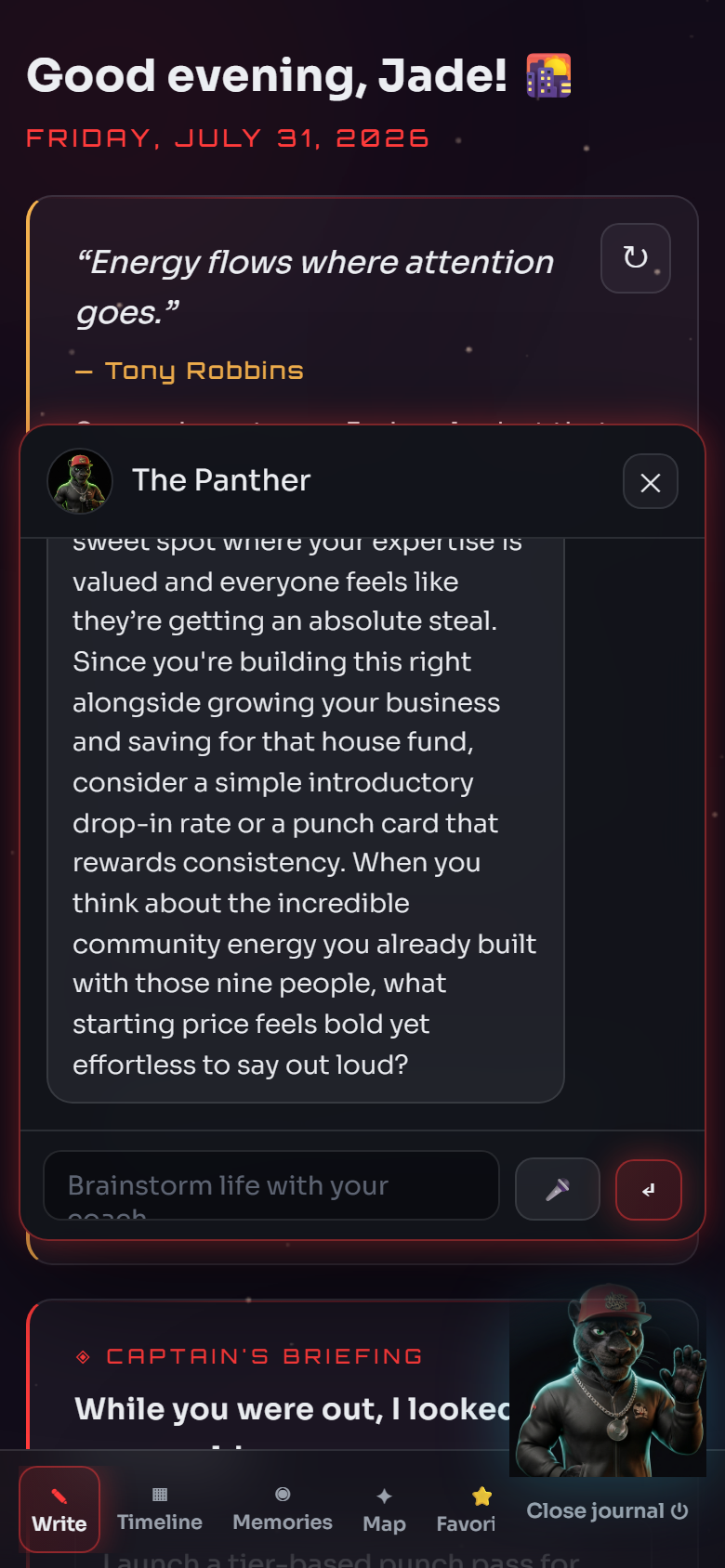
The journal's private AI coach conversation in LIZAX JOURNAL. Use the workbook actions in this guide to carry an exercise into your own private entry.
Navigating Shared Spaces, Memories, and Overlapping Groups
One of the most delicate challenges of a friendship breakup is managing the ecosystem around it. Overlapping social circles, favorite coffee spots, shared recipes, and seasonal traditions do not disappear overnight. Attempting to force mutual friends to take sides usually escalates tension, while isolating yourself completely can heighten sadness. Instead, establish gentle boundaries around what you choose to share with mutual acquaintances. You can hold gratitude for past memories without forcing present intimacy. Make a note about this in your journal: record which physical places or group settings trigger discomfort right now, and give yourself explicit permission to take temporary breaks from those environments. Recognizing how your physical environment interacts with your emotional safety helps protect your mental bandwidth during periods of heavy transition.
Evaluating Repair versus Gentle Disengagement
Deciding whether to pursue repair or accept a permanent shift requires honest self-reflection rather than reactive guilt. Use these concrete reflection questions to clarify your path forward.
Examine the Disconnect
Determine if the strain stems from an isolated conflict, an unspoken boundary violation, or an irreducible divergence in core values.
Assess Reciprocal Effort
Reflect on whether both parties possess the emotional energy and willingness required to engage in an honest, vulnerable conversation.
Identify Core Boundaries
Define what emotional safety looks like for you today, recognizing that choosing distance does not diminish the true value of past memories.
Tools for Private Emotional Processing
Processing relational loss requires complete privacy and zero judgment. Lizax Journal provides specialized structure to help you process complex interpersonal dynamics safely.
Voice Input for Raw Clarity
Speak your candid thoughts freely using voice input whenever intense emotions arise [F1].
Searchable Favorites Library
Organize memories, places, songs, and recipes in searchable favorites so you can separate meaningful history from present boundaries [F5].
Bounded Coach Memory
Engage with custom AI coaches that rely on a bounded 600-word rolling summary for lasting facts, ensuring full entries remain private [F3].
Exclusion Safety Controls
Your generated drafts, research copy, and coach prose are explicitly excluded from personal memory condensation [F4].
Try This in Your Journal
Follow these structured steps inside your private space to process a shifting friendship with honesty and self-compassion.
1. Capture the Unsent Message via Voice Input
Open your Lizax Journal and use voice input to record everything you wish you could say to them [F1]. Let it be raw, candid, and uninterrupted [F2].
2. Categorize Your Favorites and Places
File shared places, books, or songs into your searchable favorites library to distinguish precious past memories from your present daily routine [F5].
3. Prompt Your Preferred AI Coach
Ask your coach: 'Help me analyze this conflict without judgment and identify what boundaries I need to feel grounded right now' [F1, F3].
4. Schedule a Monthly Emotional Review
Look back during your monthly review to observe how your emotional pain naturally evolves over time without forcing artificial deadlines [F1].
Growth often requires us to hold gratitude for who someone was to us in one season, while respecting the boundaries required for who we are becoming in the next.
Honoring Past Chapters Without Diminishing Your Present
Begin Processing Your Story in Complete Privacy
Give your grief, memories, and personal growth a safe, intelligent home. Explore Lizax Journal today to build a permanent record of your personal journey on your own terms [F1].
Why do friendship breakups feel as painful as romantic ones?
Friendship breakups carry intense emotional weight because platonic friends often serve as core emotional anchors and witnesses to major life chapters. Because society lacks formal rituals for platonic endings, the loss frequently manifests as ambiguous grief.
How can journaling help me decide whether to repair a friendship?
Journaling allows you to express unfiltered feelings safely without escalating social conflict. By reviewing past entries and voice notes over time, you can objectively evaluate patterns, personal boundaries, and mutual effort [F1].
Is my private journal data used in coach summaries?
In Lizax Journal, members choose what they write or save [F2]. The coach uses a bounded rolling summary capped at 600 words for key personal facts, keeping your complete private entries separate, while external drafts and coach responses are excluded from memory condensation [F3, F4].
FROM EDUCATION TO PERSONAL ACTION
Use this insight inside LIZAX JOURNAL
This article remains public educational content. Inside the private journal, you decide whether to apply it to your own life, save a reflection or discuss it with your coach.
Connected people and memoriesConnect reflections to the people and moments involved without automatically sharing private journal content.See how this feature works →
One Life Coach Operating SystemThe journal, memory, goals, timeline, map, favorites, coach and books are connected views—not separate journals.Explore the complete system →
Try it without an accountUse fictional sample data to feel the raw-words-to-coaching transformation. Nothing is saved and no paid AI call is made.Open the interactive demo →
Sources & verified facts
Product: A private AI journal with voice input, long-term condensed memory, a choice of coaches, photos, favorites, places, habits, emotional reflection, monthly reviews and a printable yearbook.
Private app behavior: Members choose what they write or save; public articles are not automatically copied into private journal entries.
Coach memory: The coach uses a bounded rolling summary capped at 600 words for lasting personal facts, while full private entries remain separate.
Memory exclusions: Generated drafts, blog copy, scripts, research text and the coach's prose are explicitly excluded from personal memory condensation.
Library tools: The journal supports searchable favorites for people, songs, dishes, recipes, places, books, activities, products and memories.
This article is for educational and reflective purposes only and does not constitute mental health treatment, professional therapy, or psychological diagnosis. If you are experiencing distress, consult a qualified healthcare professional or crisis support service [S1].