The Cartography of Everyday Life: How Songs, Recipes, and Places Shape Our Personal Archives
We do not experience our lives in sterile, chronological timelines. We live in the music we listened to, the meals we shared, and the physical spaces we inhabited.
A LIZAX JOURNAL visual created for this guide. The practical journal exercise appears below.
The Undeniable Pull of Sensory Memory Anchors
Memory is rarely an orderly filing cabinet. Instead, it behaves more like a web of associations waiting for the right trigger to illuminate. While we often struggle to recall what we accomplished on a random Tuesday three years ago, a single chord progression from a forgotten radio hit or the distinct, smoky aroma of charred rosemary can instantly transport us back to a precise kitchen, a specific conversation, or an emotional state we thought we had outgrown. These songs, recipes, dishes, and places act as personal memory anchors—visceral, immediate shortcuts to our lived history.
To build a highly personalized record of your life, you do not need complex, unproven neurological theories. You only need to pay attention to direct human experience. Sensory inputs are deeply intertwined with our emotional experiences. When we experience something meaningful, our surroundings—the ambient music, the flavor of the food, the geometry of the room—are captured alongside our internal state. When we intentionally document these anchors, we create an accessible archive of our personal growth, giving us a clearer view of who we were and who we are becoming. This is the foundation of emotional clarity: recognizing the specific threads of physical experience that weave our inner narratives together.
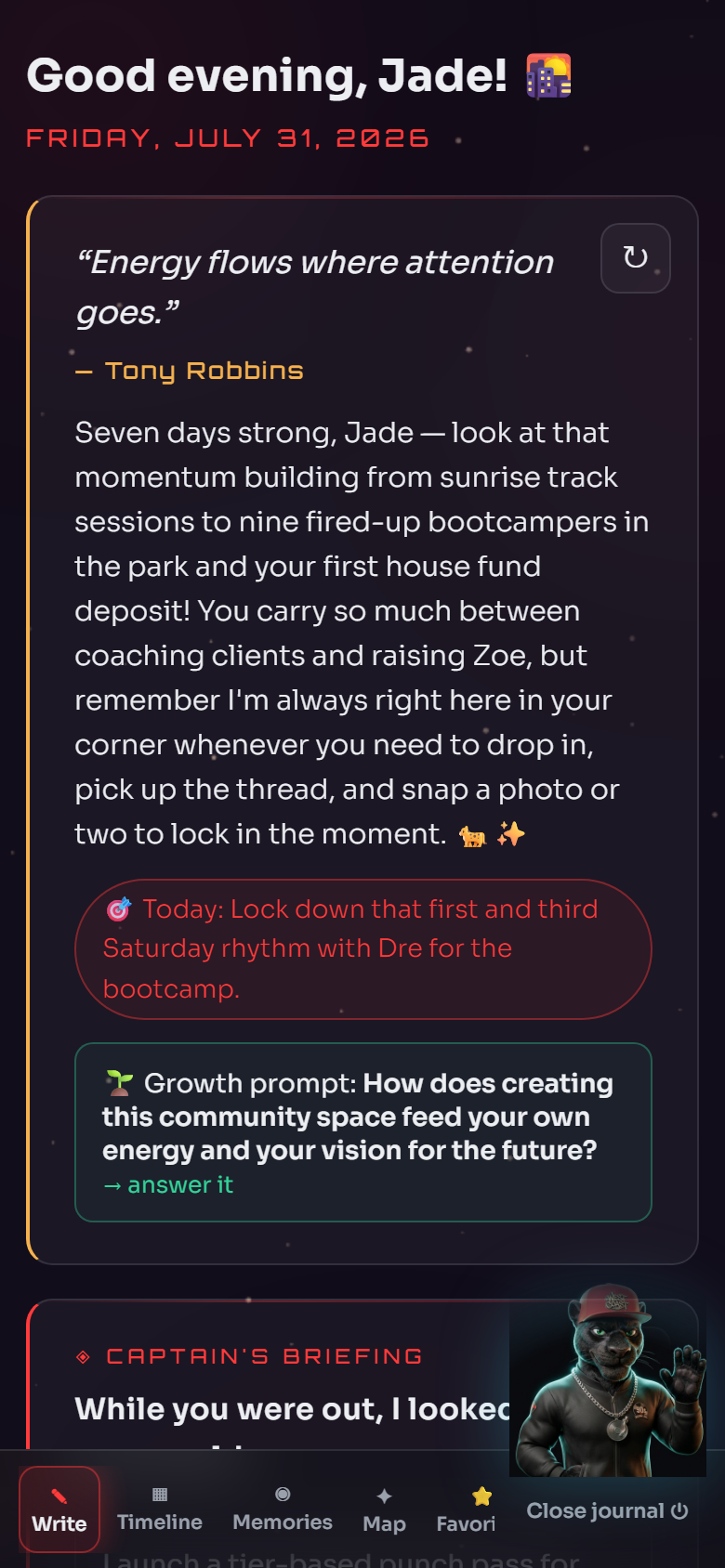
The private daily writing workspace in LIZAX JOURNAL. Use the workbook actions in this guide to carry an exercise into your own private entry.
Soundtracks of the Soul: Indexing Songs to People
Music possesses a unique ability to capture the exact emotional temperature of a relationship or a season of life. A specific song can become so deeply entangled with a person that hearing it years later can feel like a sudden conversation with them. However, without intentional indexing, these musical associations can fade into vague nostalgia.
To preserve these anchors, practice pairing music with your reflections. When a song brings a specific face or era to mind, do not let the moment pass undocumented. Write down the title, the artist, and the exact memories it evokes. Note the texture of the relationship: What were you both building? What did that song represent for you at that time?
Make a note about this in your journal: 'Next time a song pulls a specific memory or person to the surface, take two minutes to log it. Identify the song, name the person, and record the exact feeling that arose when the music started.' By utilizing dedicated library tools, you can keep these files organized and searchable, transforming a fleeting auditory experience into a permanent, structured favorite [F5].
Culinary Heritage: Preserving Family Recipes and Shared Dishes
Dishes and recipes are more than mere sustenance; they are physical manifestations of care, culture, and history. A family recipe written on a stained index card is a living archive of generations past, carrying with it the sensory atmosphere of the kitchens where it was prepared. The taste of a specific dish can evoke the comfort of childhood, the excitement of a past journey, or the warmth of a quiet Sunday evening at home.
Preserving these culinary anchors involves more than just copying down ingredient lists and measurements. It requires documenting the context surrounding the dish: Who usually made it? What did the kitchen smell like when it was simmering? Who sat around the table to eat it?
When you record these details, you are not just compiling a cookbook; you are archiving your culinary heritage. Using a private journal to capture these sensory textures ensures that the emotional weight of a shared meal is never lost to time. In LIZAX JOURNAL, you can tag these records as searchable favorites, allowing you to easily locate the stories behind your favorite recipes, dishes, and culinary traditions whenever you need a touchstone of comfort [F5].
Mapping Your Geography: Attaching Places to Your Personal History
Our lives are deeply rooted in physical geography. The street corners we frequented during transitional periods, the specific coffee shops where we made major life decisions, and the quiet parks where we sought solitude all hold pieces of our personal history. These places function as physical containers for our emotional milestones.
When we associate a specific location with a journal entry, we ground our internal reflections in the real world. This practice of geotagging or mapping our memories helps us see how our environments shape our moods, choices, and personal evolutions. Returning to a physical place—or even just recalling its spatial layout—can unlock buried details of what we felt when we walked those paths. By intentionally linking places to your written reflections, you create a beautiful, physical atlas of your emotional journey, ensuring that your memories remain tethered to the physical world where they actually unfolded [F1][F5].
Try This in Your Journal: Build a Sensory Memory Collection
Create an active, deeply personal repository of your life's most meaningful sensory anchors inside LIZAX JOURNAL [F1]. Here is a practical, step-by-step process to begin building your archive:
Capture the Anchor with Voice Input
The next time you are listening to a nostalgic album, cooking a family dish, or visiting a significant place, open your journal and use the voice input feature to record your immediate, raw thoughts [F1]. Do not worry about structure; simply describe the sights, sounds, smells, and emotions of the moment.
Use Searchable Favorites to Classify
Go to your journal's library tools and classify your entry under searchable favorites [F5]. You can designate these as favorites for people, songs, dishes, recipes, or places, making it incredibly simple to pull up every memory associated with a specific sensory trigger in the future.
Reflect with an AI Coach
Engage with your choice of AI coaches to dive deeper into the emotional significance of your sensory anchors [F1]. To help guide your self-exploration, copy and paste this prompt into your next chat: 'Ask your coach: Based on the songs, recipes, and places I have logged recently, what patterns are emerging about what makes me feel most grounded, safe, and connected?' Your coach will use a bounded rolling summary capped at 600 words to remember these core personal facts [F3], while keeping your full private entries secure and separate.
Review and Compile into a Printable Yearbook
At the end of the month, revisit these sensory logs during your monthly reviews [F1]. Over time, these compiled favorites, emotional reflections, and accompanying photos can be converted into a beautiful, printable yearbook [F1]—providing you with a tangible, permanent sensory record of your life.
Journaling is not about performing for an audience or writing perfect, sterile prose. It is about capturing the raw, sensory texture of your daily existence so that you can look back and recognize the path you have walked.
A Grounded Approach to Personal Reflection
Create Your Living, Private Archive Today
Your memories are too precious to be scattered across random notes apps, social media feeds, or fading recipe cards. Lizax Journal offers a secure, stylish, and emotionally intelligent space to document your songs, recipes, places, and life stories [F1]. Rest assured that your private entries remain fully confidential; public articles or external guides are never automatically copied into your personal journal [F2], and your generated drafts or research notes are strictly excluded from your coach's memory condensation [F4]. Start preserving your personal history today.
How does LIZAX JOURNAL help me organize my memory anchors?
LIZAX JOURNAL provides advanced library tools that support searchable favorites for people, songs, dishes, recipes, places, books, activities, products, and memories [F5]. This allows you to tag and organize your sensory triggers so you can instantly retrieve them whenever you want to reflect on a specific era of your life.
Are the articles I read on this marketing site automatically saved to my personal journal?
No. Members have complete, private control over what they write or save; public marketing articles and guides are never automatically copied into your private journal entries [F2].
How do LIZAX JOURNAL coaches remember my sensory anchors over time?
Your selected coach uses a bounded rolling summary capped at 600 words for lasting personal facts—such as the names of important people, key places, or favorite recipes [F3]. This ensures the coach maintains contextual awareness of your life while keeping your full, detailed private entries completely separate and secure.
Can I prevent certain texts or research from being summarized by the coach?
Yes. Memory exclusions are strictly enforced: generated drafts, blog copy, scripts, research text, and the coach's own prose are explicitly excluded from your personal memory condensation [F4], keeping your core life summaries focused strictly on your authentic experiences.
FROM EDUCATION TO PERSONAL ACTION
Use this insight inside LIZAX JOURNAL
This article remains public educational content. Inside the private journal, you decide whether to apply it to your own life, save a reflection or discuss it with your coach.
Connected memory systemKeep the entry, people, photographs, places and meaningful details connected to their original story.See how this feature works →
One Life Coach Operating SystemThe journal, memory, goals, timeline, map, favorites, coach and books are connected views—not separate journals.Explore the complete system →
Try it without an accountUse fictional sample data to feel the raw-words-to-coaching transformation. Nothing is saved and no paid AI call is made.Open the interactive demo →
Sources & verified facts
Product: A private AI journal with voice input, long-term condensed memory, a choice of coaches, photos, favorites, places, habits, emotional reflection, monthly reviews and a printable yearbook.
Private app behavior: Members choose what they write or save; public articles are not automatically copied into private journal entries.
Coach memory: The coach uses a bounded rolling summary capped at 600 words for lasting personal facts, while full private entries remain separate.
Memory exclusions: Generated drafts, blog copy, scripts, research text and the coach's prose are explicitly excluded from personal memory condensation.
Library tools: The journal supports searchable favorites for people, songs, dishes, recipes, places, books, activities, products and memories.
The emotional clarity and self-care practices described here are educational and designed to support personal reflection and growth. Journaling is a tool for self-discovery and is not a substitute for professional mental health counseling, therapy, or medical intervention.
Authoritative resource
For official guidance on caring for family papers and photographs, consult the U.S. National Archives alongside the organizational workflow in this guide.