1. Evidence (What actually happened)
Strip away immediate hyperbole and record the objective event or feeling. Keep it factual and concise—whether spoken into a voice note or typed in two simple sentences.
Transform daily reflection from a daunting chore into a frictionless, emotionally intelligent habit using structured micro-entries, voice capture, and smart memory synthesis.

For many adults seeking emotional clarity and self-care, starting a journal begins with ideal intentions: a pristine notebook, a quiet desk, and a promise to write every evening. Within two weeks, however, the habit often transforms into a burdensome chore. You sit down late at night, exhausted, staring at a blank page feeling an obligation to summarize every meeting, meal, and minor frustration. When journaling feels like an administrative assignment or homework demanding a perfect submission, the authentic self-expression vanishes, leaving behind guilt and blank pages. Real personal growth does not require filling reams of paper with chronological recaps. True clarity comes from acute, targeted self-awareness—spotting a single boundary crossed, recognizing a subtle shift in energy, or acknowledging a hidden win. By replacing long-form daily obligations with lightweight capture mechanisms, you protect your emotional bandwidth while building a permanent, stylish record of your life.
To prevent journaling from feeling like schoolwork, streamline your daily entry into a three-pass method. This framework distills raw daily experience into immediate clarity without requiring more than two or three minutes.
To see how this framework functions in practice, compare traditional unstructured venting against the Evidence-Meaning-Next Action method. Traditional Venting (15 minutes of writing): 'I am completely burnt out by my team meetings. Today's sync ran 30 minutes late again, nobody read my prep notes, and I sat there feeling invisible and furious. I don't know why I bother preparing slides if everyone is just going to talk over each other...' EMNA Method (60 seconds via voice input): • Evidence: Today's strategy sync ran 30 minutes over, and my deferred agenda item was moved to next week. • Meaning: I felt unvalued because my focus time was sacrificed without consent, highlighting a key boundary around my work schedule. • Next Action: Send a brief note requesting that agenda time limits be confirmed before tomorrow's follow-up call. Notice the psychological difference: the unstructured entry drains energy by re-living the frustration, whereas the EMNA approach acknowledges the reality, isolates the core value, and creates a constructive path forward.
Single entries capture moments, but synthesized reviews capture trajectory. Relying on manual re-reading of past entries is time-consuming and often overlooked, which is where intelligent long-term memory transforms reflection.
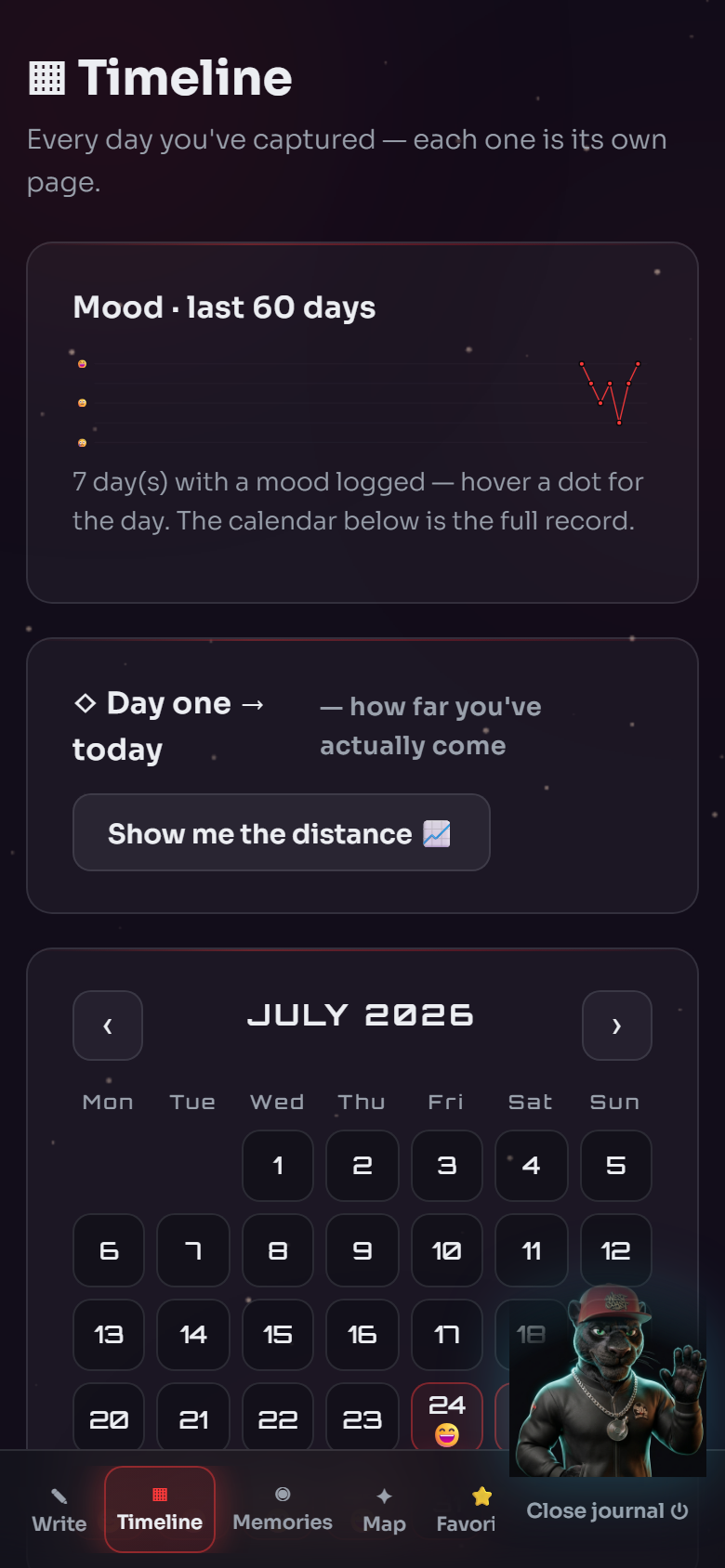
Put this low-friction system into practice today inside LIZAX JOURNAL using these simple steps:
Journaling should be a private mirror that restores clarity, not a daily balance sheet that demands payment. Authentic personal growth happens when brief, candid reflections replace performative writing routines.
The psychological benefits of written self-reflection are well-documented across behavioral research. Systematic reviews of expressive writing and positive reflection interventions indicate that structured written reflection can foster subjective health, emotional regulation, and psychological wellbeing [S1], [S2]. Research specifically exploring positive expressive writing highlights how focusing on core values, gratitude, and adaptive reframing supports self-efficacy and mood stability [S2]. However, understanding the limitations of journaling is equally vital. Journaling is not a universal panacea or a substitute for clinical psychiatric care or professional psychotherapy [S1]. Furthermore, studies demonstrate that unguided, repetitive venting—focusing endlessly on negative emotions without constructive reframing or action steps—can inadvertently amplify rumination and stress rather than resolve it [S1]. Effective self-reflection requires balance: acknowledging genuine distress while gently guiding the mind toward perspective, self-compassion, and micro-actions.
Keep these targeted prompts handy to kickstart quick, insightful interactions whenever you open your app.
Experience private AI voice journaling, long-term condensed memory, customized coaching, emotional reflection tracking, and elegant printable yearbooks.
Start Your LIZAX JOURNAL TodayTraditional diary writing often focuses on detailed chronological recaps of events. Growth-focused journaling prioritizes emotional awareness, core meaning, and actionable next steps over long-form narrative summaries.
Yes. Using concise frameworks like Evidence-Meaning-Next Action alongside voice input allows you to capture meaningful insights and emotional clarity in under two minutes without burnout.
No. While research demonstrates that positive expressive writing supports emotional wellbeing [S2], journaling is a personal reflection tool, not a substitute for clinical mental health treatment or professional therapy [S1].
LIZAX JOURNAL uses long-term condensed memory, emotional reflection tags, habit tracking, monthly reviews, and printable yearbooks to turn scattered daily notes into a cohesive, stylish lifelong archive.
FROM EDUCATION TO PERSONAL ACTION
This article remains public educational content. Inside the private journal, you decide whether to apply it to your own life, save a reflection or discuss it with your coach.