A LIZAX JOURNAL visual created for this guide. The practical journal exercise appears below.
The Science and Art of Writing for Emotional Clarity
When life feels demanding, internal thoughts can turn into a chaotic loop of noise. Expressive writing serves as an intentional circuit breaker, providing a quiet space to translate nebulous feelings into concrete language. Research into journaling interventions indicates that structured reflective writing can support emotional processing and reduce psychological distress [S1]. Rather than attempting to solve every problem at once, putting pen to paper or recording spoken entries allows you to observe your thoughts with objective distance [S2].
By categorizing your writing around specific emotional moments—whether you are carrying quiet depletion or sudden anger—you move from unhelpful rumination toward active self-compassion [S2]. This distinction is key: rumination keeps you trapped in an emotional storm, while reflective journaling creates the perspective needed to navigate through it.
Make a note about this in your journal: Record the primary emotion you felt today without judging whether it was 'good' or 'bad'.
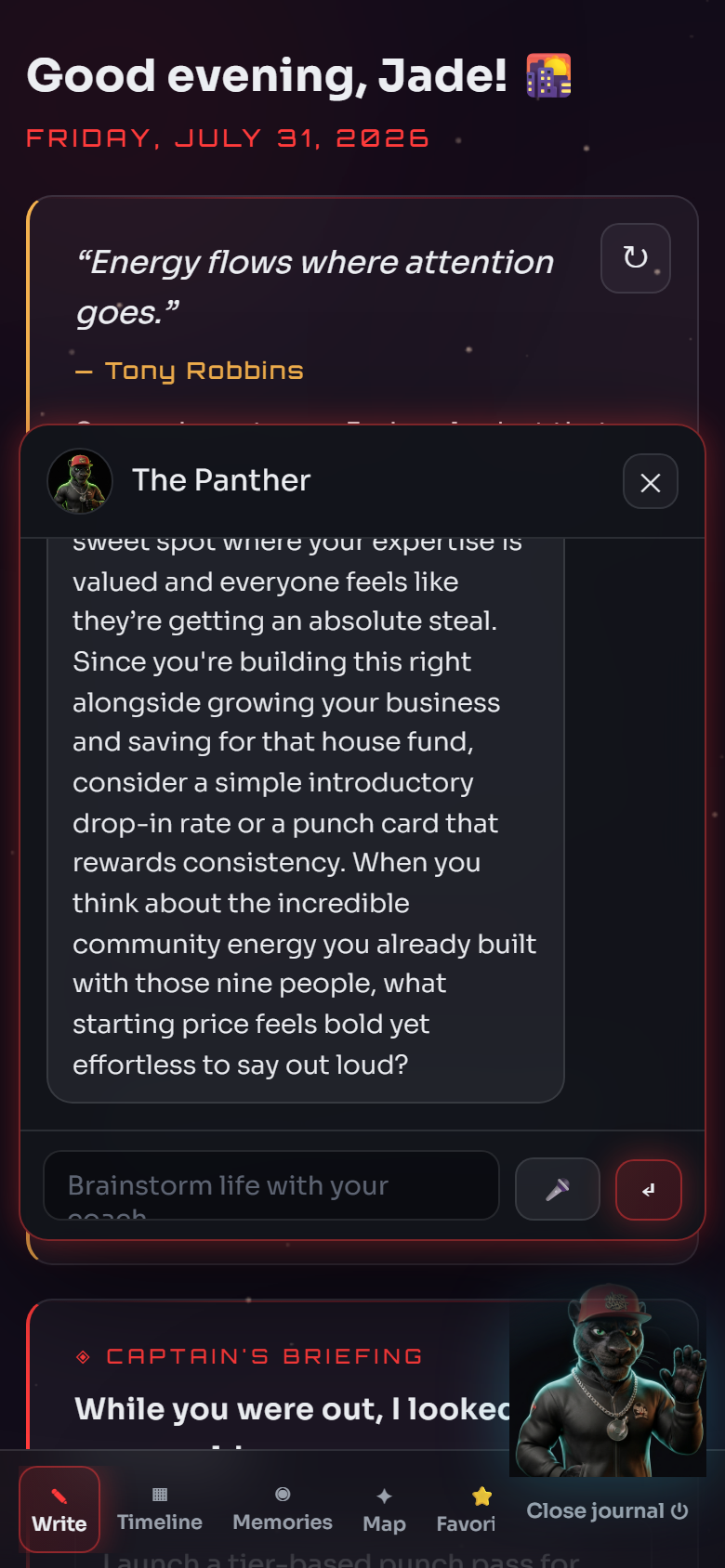
The journal's private AI coach conversation in LIZAX JOURNAL. Use the workbook actions in this guide to carry an exercise into your own private entry.
Prompts for Seven Crucial Emotional Moments
Every emotional state carries a distinct message. Use these targeted prompts whenever you need immediate focus and clarity in your entry.
When Overwhelmed
What single task or input, if paused right now, would give my mind room to breathe?
When Depleted
Where am I expending energy out of habit or obligation rather than genuine alignment?
When Angry
What boundary was crossed, and what deeply valued truth is my anger attempting to protect?
When Lonely
What kind of connection am I craving right now—to myself, to another person, or to a shared purpose?
When Uncertain
If I trusted that I could adapt to whatever happens, what decision feels most honest?
When Proud
What internal growth or silent strength am I honoring in myself today?
A Gentle 4-Step Workflow for Self-Reflection
Writing does not need to be formal or prolonged to be effective. Follow this simple framework to transition from internal overwhelm to clear insight.
Step 1: Ground and Name
Take three slow breaths and complete the sentence: 'Right now, the heavy or dominant emotion I am carrying is...'
Step 2: Unfiltered Expressive Writing
Write or speak freely without editing grammar, tone, or narrative structure for five to ten minutes, letting raw thoughts surface [S1].
Step 3: Extract the Core Need
Reread your entry and highlight any recurring theme, boundary violation, or unexpressed desire that emerged.
Step 4: Close with Integration
End your session by identifying one practical act of self-care or boundary setting for the remainder of your day.
Try This in Your Journal
Put these reflective concepts into immediate practice using the specific features built into Lizax Journal.
Step 1: Capture Voice Inputs During High Tension
When overwhelm makes typing feel tedious, speak your raw thoughts directly into Lizax Journal using voice input to clear mental clutter rapidly.
Step 2: Tag Moods, Places, and Habits
Attach photos, locations, and habit tags to your entry to build rich context around what triggers or restores your emotional balance over time.
Step 3: Ask Your Coach
Engage your selected AI coach inside Lizax Journal with this prompt: 'Based on this entry about feeling uncertain, what reflective questions can help me clarify my core values?'
Step 4: Track Long-Term Growth
Use Lizax Journal's long-term condensed memory and monthly reviews to observe your emotional evolution, creating a foundation for your printable physical yearbook.
Recognizing Boundaries: When Writing Should Pause
While expressive writing is a valuable tool for daily self-care and subjective well-being [S2], it is important to recognize its limitations. Journaling is a supplementary wellness practice, not a clinical treatment or substitute for professional healthcare [S1].
If writing triggers intense trauma responses, severe anxiety, persistent depression, or feelings of unmanageable despair, pause your journaling session immediately [S3]. Reflective writing should aid clarity, not cause emotional re-traumatization. During periods of severe distress, connecting with trusted loved ones or seeking professional guidance from licensed mental health practitioners is essential [S3]. Organizations such as SAMHSA offer confidential support services and resources to help navigate complex mental health needs [S3].
Your journal is not a judge or a taskmaster; it is a quiet, permanent space where every feeling can be named, understood, and integrated with dignity.
Reflective Grounding
Begin Your Journey to Emotional Clarity
Bring structure and beauty to your daily self-care practice with Lizax Journal—featuring private voice inputs, emotional reflection tools, custom coaches, and permanent memory keeping.
How often should I use journal prompts for emotional clarity?
You can write daily or simply whenever you feel emotionally dysregulated. Even short, 5-minute sessions can support emotional processing and clarity when practiced consistently [S2].
Can expressive writing replace professional therapy?
No. While expressive writing supports subjective well-being and stress management [S2], it is a self-care tool, not a medical or psychological treatment. Seek licensed professional care for persistent distress [S3].
How does Lizax Journal preserve my emotional history over time?
Lizax Journal combines long-term condensed memory, habit tracking, monthly reviews, and an option to print a custom physical yearbook to preserve a permanent record of your personal growth.
FROM EDUCATION TO PERSONAL ACTION
Use this insight inside LIZAX JOURNAL
This article remains public educational content. Inside the private journal, you decide whether to apply it to your own life, save a reflection or discuss it with your coach.
AI journal and contextual coachCapture the reflection in your own words and ask a coach that can use bounded, editable personal context.See how this feature works →
One Life Coach Operating SystemThe journal, memory, goals, timeline, map, favorites, coach and books are connected views—not separate journals.Explore the complete system →
Try it without an accountUse fictional sample data to feel the raw-words-to-coaching transformation. Nothing is saved and no paid AI call is made.Open the interactive demo →
This article is for educational and self-care purposes only and does not constitute medical or mental health advice. Journaling is a reflective self-care practice, not a clinical treatment. If you are experiencing severe emotional distress or mental health challenges, please consult a qualified healthcare professional or contact SAMHSA for resources [S3].