Emotional safety is not the absence of conflict; it is the presence of consistency, respect, open communication, and the freedom to be authentic without fear.
A LIZAX JOURNAL visual created for this guide. The practical journal exercise appears below.
Recognizing Emotional Safety in Daily Life
Emotional safety in everyday life is experienced as a subtle, physical sense of ease. Rather than walking on eggshells or anticipating sudden shifts in mood, you feel steady and unburdened in your interaction. It is not a state of perpetual harmony where nobody ever feels hurt, frustrated, or stressed; rather, it is an environment where difficult feelings can be expressed candidly without triggering defensiveness, silent treatment, or hostility. In safe relationships, your internal nervous system does not need to stay on high alert. You can bring your full, unedited self into conversations, share vulnerable observations, and trust that your reality will be acknowledged rather than dismissed or invalidated. Developing emotional clarity around these dynamics requires paying close attention to how you feel before, during, and after interactions. When safety is present, awkward moments or minor miscommunications do not spiral into existential threats to the connection. Instead, they become brief bumps on a clear path forward. Recognizing these everyday patterns helps you distinguish between connections that nourish your well-being and those that drain your nervous system.
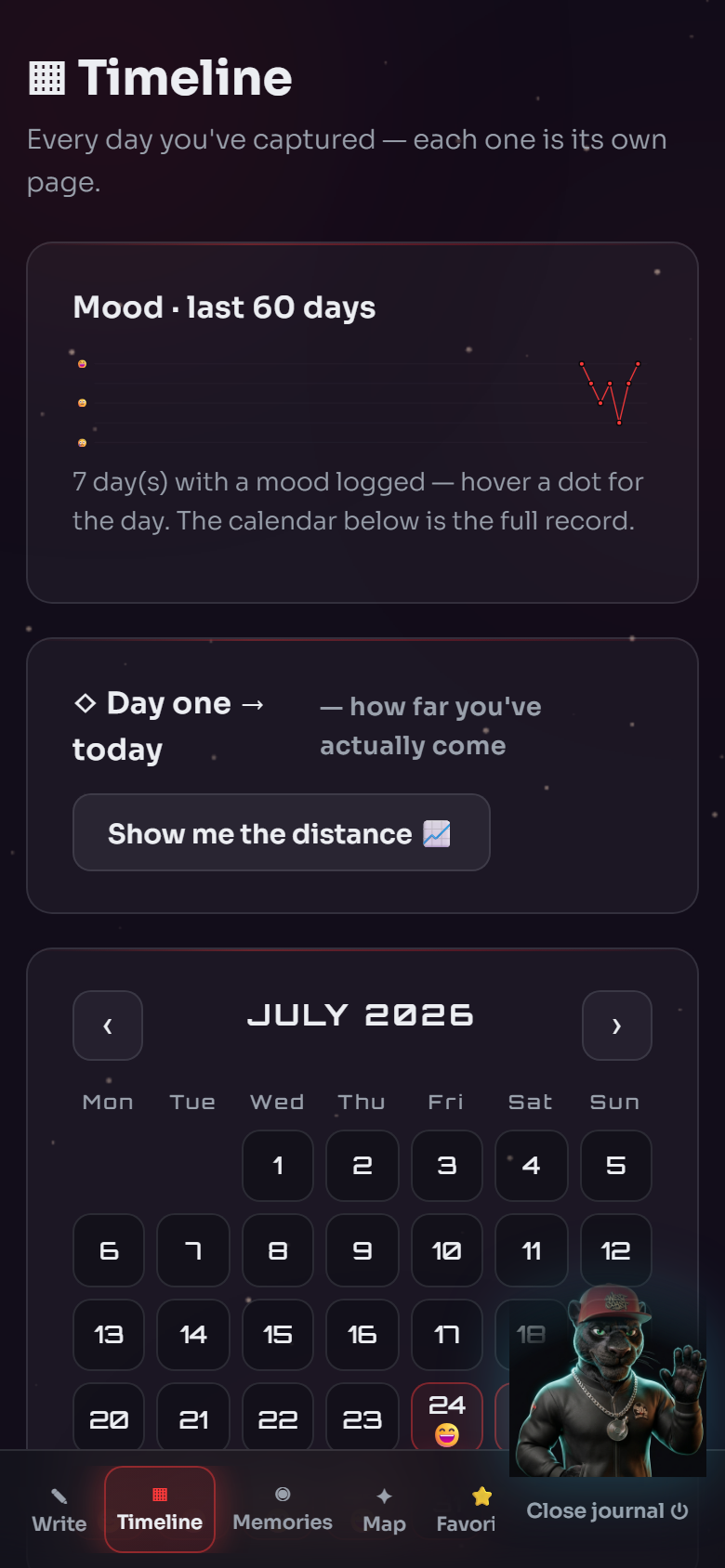
The searchable personal journal timeline in LIZAX JOURNAL. Use the workbook actions in this guide to carry an exercise into your own private entry.
The Six Observable Signs of Relational Safety
Emotional safety is not an abstract concept; it manifests in concrete, repeatable behaviors that you can observe in daily life. Paying attention to these six core indicators allows you to evaluate your connections grounded in evidence rather than wishful thinking.
Candid Honesty
You can speak your truth without needing to soften or distort facts to manage another person's reaction or temper.
Active Repair
When missteps occur, both people take accountability promptly rather than deflecting blame or ignoring the rupture.
Clear Boundaries
Setting a limit or saying no is met with respect and understanding rather than guilt, pressure, or emotional punishment.
Personal Autonomy
Your individual interests, outside friendships, and private reflections are celebrated rather than viewed as a threat.
Predictable Consistency
Words align with actions over time, creating a reliable foundation where commitments and emotional presence are dependable.
Room for Disagreement
Differing opinions and emotional perspectives are explored with genuine curiosity rather than treated as conflict or disloyalty.
How Conflict and Repair Unfold When You Feel Safe
Conflict is inevitable in any human connection, but the manner in which disagreement is handled reveals the true depth of emotional safety. In unsafe dynamics, arguments often focus on winning, proving fault, or attacking character. Conversely, safe relationships treat conflict as a joint problem-solving exercise. When friction occurs, partners or friends listen to understand rather than to formulate a counter-argument. Repair is initiated with genuine accountability—acknowledging specific behaviors, validating impacted feelings, and adjusting future actions. Furthermore, emotional safety allows both individuals to take pause when emotions run high without fear that a break signifies the end of the relationship. While personal reflection and journaling offer valuable tools for gaining clarity on relationship dynamics, they do not replace professional mental health care or therapeutic support when navigating severe relational distress or safety concerns [S1]. Recognizing where your relationships exhibit genuine repair helps you build deeper trust, honor your personal growth, and maintain realistic expectations about healthy human interaction.
Try this in your journal
Use these structured steps inside your Lizax Journal to track, clarify, and understand how emotional safety shows up in your everyday interactions [F1]. Make a note about this in your journal after your next meaningful conversation.
Step 1: Record a Recent Interaction
Use voice input or typing in your Lizax Journal to candidly describe a recent conversation, noting how your body felt during the exchange [F1].
Step 2: Tag Key Favorites and Places
Attach specific people, places, or activities from your searchable favorites to contextualize where and with whom you felt grounded or tense [F5].
Step 3: Reflect with an AI Coach Prompt
Engage your chosen coach to examine patterns. Ask your coach: 'What observable signs of boundary respect or emotional repair appeared in this entry?' [F1, F3].
Step 4: Save to Your Monthly Review
Keep your entries private while allowing Lizax's bounded 600-word rolling memory summary to capture overarching personal insights for your monthly review [F2, F3, F4].
True emotional safety never demands that you sacrifice your personal identity to maintain peace. It thrives when two distinct individuals choose to connect while preserving their own boundaries, perspectives, and room to grow.
Autonomy, Disagreement, and Personal Boundaries
Reflecting on Your Relationships Over Time
Building long-term self-awareness around your relationships requires consistent, practical tools that honor your privacy while helping you spot long-term patterns.
Private & Secure Reflection
Your private journal entries remain entirely separate, giving you complete control over what you record and keep confidential [F2].
Bounded Memory Summaries
Lizax uses a strictly bounded rolling summary capped at 600 words to remember core personal facts while excluding draft prose and coach output [F3, F4].
Searchable Memory Library
Organize memories, songs, dishes, books, places, and people into searchable favorites to easily look back on positive moments [F5].
Printable Yearbook Records
Transform monthly reviews, emotional reflection, habits, and saved photos into a beautiful permanent physical yearbook [F1].
Document Your Emotional Journey with Lizax Journal
Gaining emotional clarity about your relationships starts with a safe space to reflect, process, and record your life. Lizax Journal provides a private AI journal with voice input, long-term memory, customizable coaches, and monthly reviews designed to help you nurture personal growth [F1]. Make a note about this in your journal today to begin tracking the observable signs of emotional safety in your daily life.
Emotional safety is the grounded confidence that you can share your true thoughts, feelings, boundaries, and vulnerabilities without fear of judgment, retaliation, or emotional distance. It is built on consistency, active repair, and mutual respect.
How does journaling help build emotional clarity in relationships?
Journaling allows you to process interactions privately, identify recurring communication patterns, track physical body sensations, and evaluate whether conflict leads to genuine repair or repeated distress over time.
Does Lizax Journal share my private relationship entries with outside sources?
No. In Lizax Journal, members choose what they write or save; public articles are not automatically copied into entries [F2]. Furthermore, coach memory relies on a bounded 600-word summary while full entries stay separate [F3].
Can a journaling app replace professional relationship counseling?
No. A private journal is an educational and self-reflection tool, not a substitute for professional mental health support or therapy. For mental health or crisis support, resources like SAMHSA provide immediate guidance [S1].
FROM EDUCATION TO PERSONAL ACTION
Use this insight inside LIZAX JOURNAL
This article remains public educational content. Inside the private journal, you decide whether to apply it to your own life, save a reflection or discuss it with your coach.
AI journal and contextual coachCapture the reflection in your own words and ask a coach that can use bounded, editable personal context.See how this feature works →
One Life Coach Operating SystemThe journal, memory, goals, timeline, map, favorites, coach and books are connected views—not separate journals.Explore the complete system →
Try it without an accountUse fictional sample data to feel the raw-words-to-coaching transformation. Nothing is saved and no paid AI call is made.Open the interactive demo →
Sources & verified facts
Product: A private AI journal with voice input, long-term condensed memory, a choice of coaches, photos, favorites, places, habits, emotional reflection, monthly reviews and a printable yearbook.
Private app behavior: Members choose what they write or save; public articles are not automatically copied into private journal entries.
Coach memory: The coach uses a bounded rolling summary capped at 600 words for lasting personal facts, while full private entries remain separate.
Memory exclusions: Generated drafts, blog copy, scripts, research text and the coach's prose are explicitly excluded from personal memory condensation.
Library tools: The journal supports searchable favorites for people, songs, dishes, recipes, places, books, activities, products and memories.
This article is for educational and self-reflection purposes only and does not constitute psychological advice, relationship diagnosis, or mental health treatment. If you are experiencing relational distress or mental health challenges, please consult a qualified healthcare professional or explore support resources such as SAMHSA [S1].